StoryJournalToolsFAQBegin
← All tools
Free tool

Comets You Could See, by Year

Every great comet you could see without a telescope since 1811. Pick one and see the night sky it hung in — over any city you like.

2024

Comet Tsuchinshan–ATLAS

Visible Sep 2024 – Nov 2024

Bright in the October evening sky, with a rare second tail that pointed toward the Sun instead of away from it.

Comes back: Never. It is on its way out of the solar system for good.

See the sky that night →Opens over New York — change it to your own city.
2020

Comet NEOWISE

Visible Jul 2020 – Aug 2020

The comet of the lockdown summer. In July it hung low in the north-west after dark, easy to find even from the suburbs.

Comes back: In roughly 6,800 years.

See the sky that night →Opens over New York — change it to your own city.
2007

Comet McNaught

Visible Jan 2007 – Feb 2007

The brightest comet in forty years, seen in daylight. From the Southern Hemisphere its tail fanned out into dozens of curved streaks.

Comes back: Probably never. Its orbit is carrying it out of the solar system.

See the sky that night →Opens over Sydney — change it to your own city.
1996–97

Comet Hale–Bopp

Visible May 1996 – Dec 1997

Visible without a telescope for eighteen months, a record. It was probably seen by more people than any comet in history.

Comes back: In roughly 2,500 years.

See the sky that night →Opens over New York — change it to your own city.
1996

Comet Hyakutake

Visible Feb 1996 – May 1996

Passed only 15 million km from Earth. For a few nights in March its tail stretched across more than half the sky.

Comes back: In tens of thousands of years.

See the sky that night →Opens over New York — change it to your own city.
1986

Halley's Comet

Visible Dec 1985 – Apr 1986

A disappointing return: faint and low, and best from the Southern Hemisphere. Spacecraft flew past it that March.

Comes back: In 2061.

See the sky that night →Opens over Sydney — change it to your own city.
1976

Comet West

Visible Feb 1976 – Mar 1976

A broad, fan-shaped tail before dawn in March. Its core broke into four pieces as it passed the Sun.

Comes back: In hundreds of thousands of years, if ever.

See the sky that night →Opens over New York — change it to your own city.
1965

Comet Ikeya–Seki

Visible Oct 1965 – Nov 1965

It skimmed less than 500,000 km above the Sun's surface and was bright enough to see in daylight.

Comes back: In roughly 900 years.

See the sky that night →Opens over Tokyo — change it to your own city.
1910

Halley's Comet

Visible Apr 1910 – Jun 1910

Earth passed through its tail that May, and some people bought “comet pills” to survive it. Mark Twain, born in a Halley year, died the day after it rounded the Sun.

Comes back: In 2061.

See the sky that night →Opens over New York — change it to your own city.
1882

Great September Comet

Visible Sep 1882 – Feb 1883

So bright it was seen beside the Sun at midday. It broke into several pieces on the way round.

Comes back: Its pieces return in roughly 700 to 1,000 years.

See the sky that night →Opens over New York — change it to your own city.
1861

Great Comet of 1861

Visible May 1861 – Aug 1861

On 30 June 1861 the Earth passed through its tail. For a few nights the tail reached across half the sky.

Comes back: In roughly 370 years.

See the sky that night →Opens over London — change it to your own city.
1858

Donati's Comet

Visible Aug 1858 – Nov 1858

Its curved tail made it the most painted comet of the century, and it was the first comet ever photographed.

Comes back: In roughly 2,000 years.

See the sky that night →Opens over London — change it to your own city.
1811

Great Comet of 1811

Visible Apr 1811 – Jan 1812

Visible without a telescope for about 260 days. It was still in the sky when the New Madrid earthquakes began that December.

Comes back: In roughly 3,000 years.

See the sky that night →Opens over New Madrid — change it to your own city.
Quick answer
  • The 1990s had two great comets: Hyakutake in March 1996 and Hale-Bopp from 1996 to 1997.
  • The most recent were NEOWISE in July 2020 and Tsuchinshan–ATLAS in October 2024.
  • Halley's Comet was last seen in 1986 and comes back in 2061.

Was there a comet the year you were born?

Great comets — the kind you can see from a backyard — turn up every ten years or so, with long gaps in between.

If you were born in 1996 or 1997, you had two. If you were born in 2020, NEOWISE was in the sky that summer.

Most years had none. That’s part of what makes the years that did feel special.

How to see the sky the night a comet was out

Every comet above has a link that opens our Sky on Any Date map on one of its best nights. The comet is drawn with its tail, among the real stars of that night.

The map opens over a sample city. Type your own town to see where it sat in your sky.

Comets usually hang low, close to where the Sun has just set or is about to rise. If yours isn’t on the map, move the time an hour or two.

Have a night in mind?
See the real sky for any date and any place, comet or not.
Open the sky map

Why comets aren’t on the posters

Our star map posters show the stars, planets, constellations and Milky Way exactly as they were. A comet’s position we can work out closely, but not how long or bright its tail looked that night.

So comets live on the free maps, where a best guess is fine, and stay off the prints, where it isn’t.

How we know where each comet was

Each comet’s path comes from NASA’s Jet Propulsion Laboratory. We checked our positions against NASA’s own tables and they agree to within a sixtieth of a degree.

The dates each comet was visible come from the people who watched them.

When is the next great comet?

Nobody knows. Most great comets are found only months before they arrive.

  • Halley’s Comet is the one we can plan for: it returns in 2061.
  • For what’s up tonight, the Sky Tonight map will show a bright comet whenever there is one.

FAQ

Was there a comet in 1997?

Yes — Hale-Bopp, one of the most-watched comets ever. It was visible without a telescope from mid-1996 to late 1997, and brightest around April 1, 1997.

Hyakutake came the spring before, in March 1996, so the mid-90s had two.

When will Halley's Comet come back?

In 2061. It last came past in 1986, when it was faint and low for most of the world.

It comes round about every 76 years, so most people get one chance at it.

Where is Hale-Bopp now?

Far beyond the planets, still heading away from the Sun. It takes about 2,500 years to go round once, so nobody alive will see it again.

What was the comet in 1811?

The Great Comet of 1811. It was visible for about 260 days and brightest in October 1811, and it was still in the sky when the New Madrid earthquakes began on December 16.

Its next visit is roughly 3,000 years away.

Will the comet be on my star map poster?

No. Comets appear on our free sky maps so you can see where one was, but the posters show the stars, planets, constellations and Milky Way only.

A comet’s tail and brightness can’t be drawn with the same accuracy as the stars, and a poster should be exact.
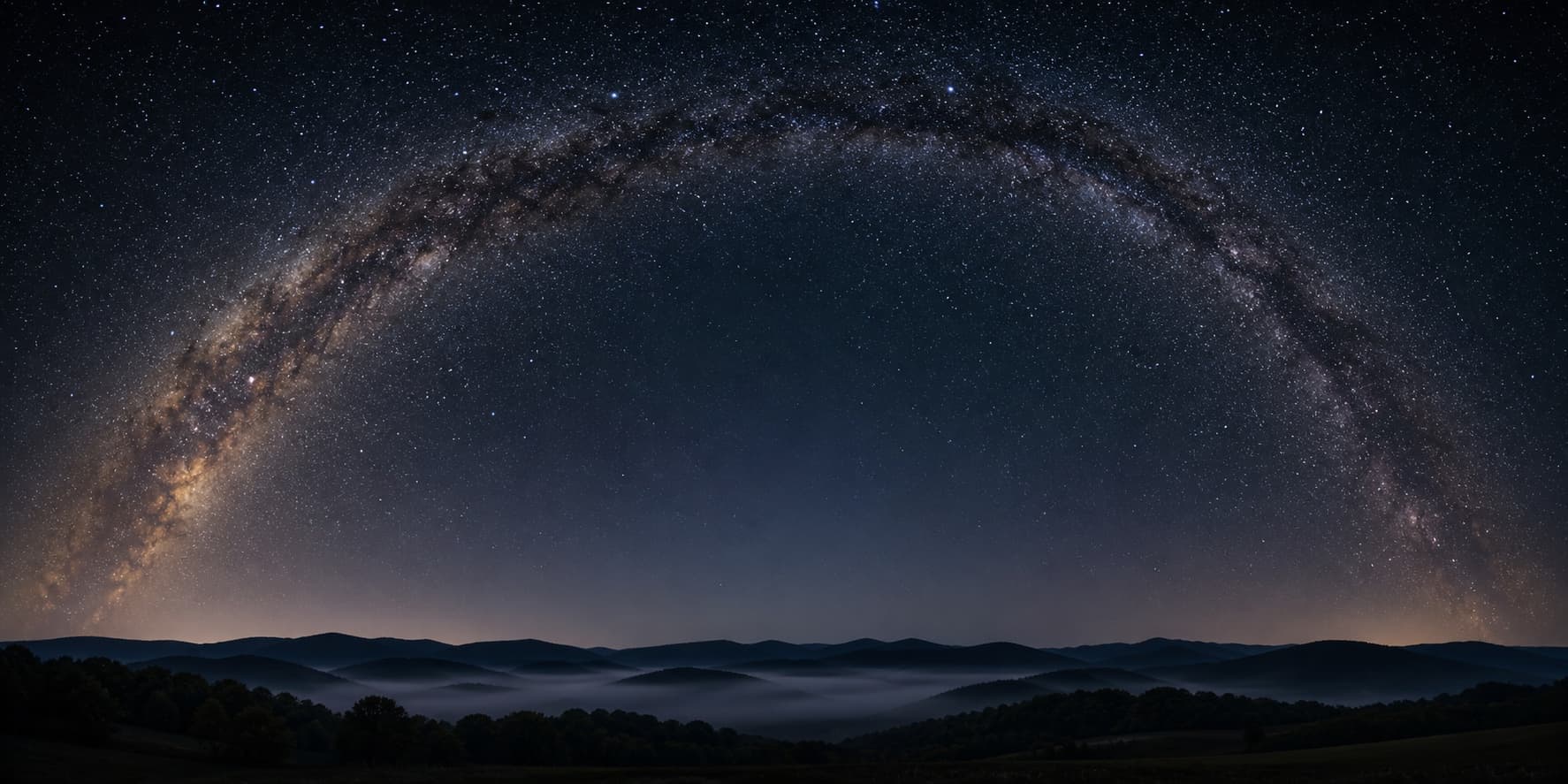
Some nights are worth keeping.

Make your star map

Custom star maps, rendered from real astronomical data. Yours as a digital bundle within about 10 minutes — print, wallpaper, share.

Explore
Design YoursDesignsStoryFAQ
Tools
Sky on Any DateSky Tonight2026 Sky CalendarAurora ForecasterFull Moon CalendarBirth Star SignNext Meteor ShowerNext Conjunction
Company
AboutContact
Legal
TermsPrivacyRefunds
© 2026 SkyWhenThe night, kept.