How to use the countdown
The hero counts down to the next conjunction — the moment the two planets appear closest together. That’s the headline answer to “when’s the next one.”
Set your location — type a city, or tap “Or use my exact location” underneath — and the tool tells you whether the pairing is above your horizon when it’s closest. Nothing is stored; the math runs in your tab.
Getting the most out of a conjunction
Conjunctions are among the most forgiving sky events to watch — they’re bright, they last for nights, and they need no special gear. A few things still help:
- A clear horizon. Many conjunctions happen low in the dawn or dusk sky. A view with no buildings or trees in the way — east before sunrise, or west after sunset — makes all the difference.
- Timing. The pair looks close for several nights, so if clouds spoil the exact date, the night before or after is nearly as good.
- Binoculars. Not essential, but they turn a pretty pairing into a striking one — especially when a planet sits beside a star cluster like the Beehive.
- Know what you’re seeing. The bright stars and planets guide helps you tell Venus from Jupiter at a glance.
Why your location matters
A conjunction is the same event worldwide, but how well you see it is not. From one latitude a pairing climbs high into a dark sky; from another it barely clears the horizon before dawn washes it out.
That’s why the tool checks your horizon rather than just giving a date. To plan around the year’s bigger events too, the 2026 sky calendar has every eclipse, supermoon, and conjunction, and Sky Tonight shows what’s up right now from where you are.
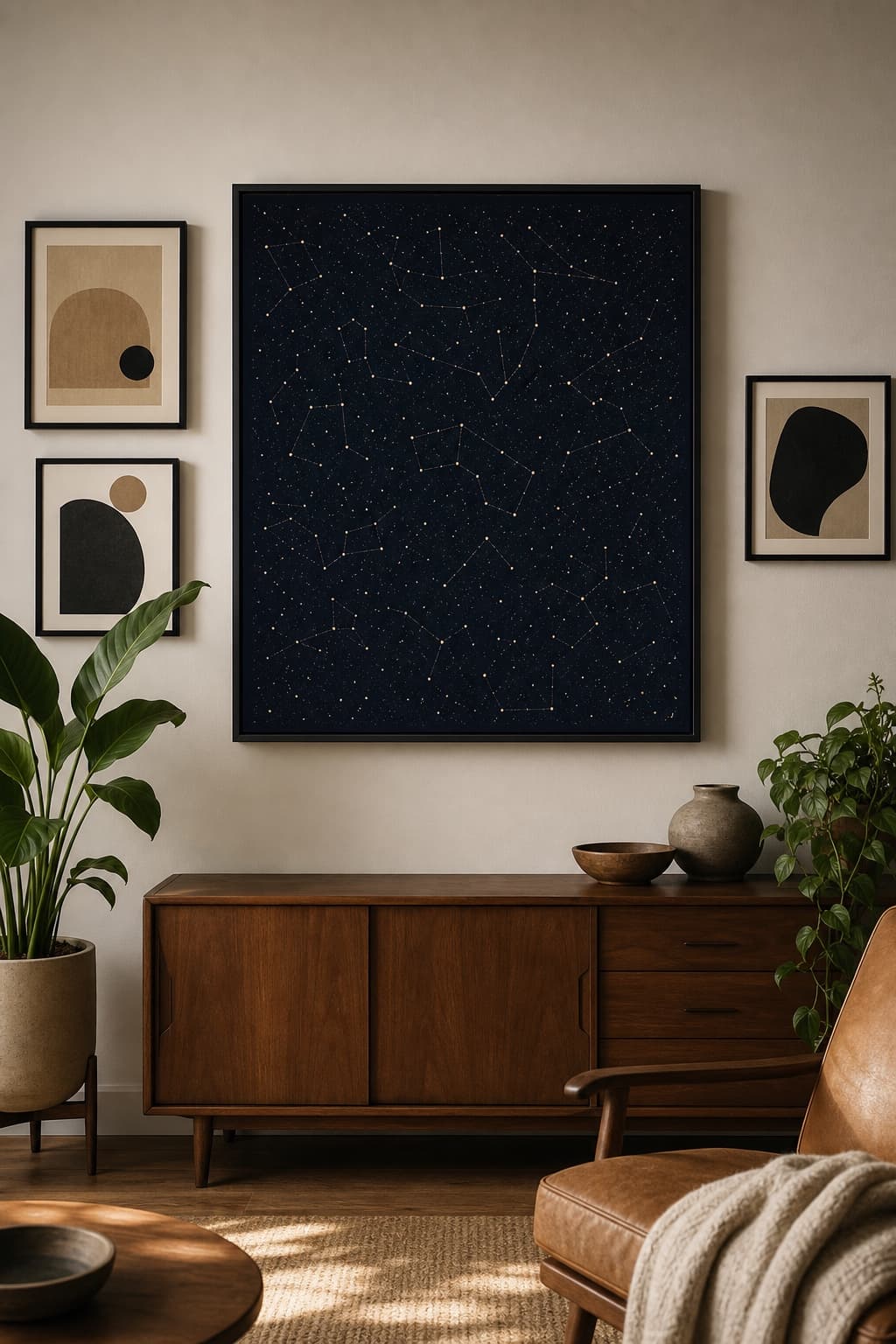
A conjunction is a fleeting alignment — the planets drift apart within days. But the sky they shared is fixed, and the “save this sky” links open the customizer pre-filled with the date and your location, so a night two worlds lined up becomes something you can keep on a wall.
FAQ
What is a planetary conjunction?
A conjunction is when two objects — usually two planets, or a planet and the moon — appear close together in the sky from our point of view. They’re not actually near each other in space; they just line up along nearly the same direction.
The conjunctions explainer walks through why they happen and which ones are worth setting an alarm for.
To see how far apart the two planets really are, open the 3D solar system and run time to the date.
When is the next planetary conjunction?
The countdown at the top of this page always points to the next one, updating live. The 2026 highlights are Venus and Saturn in the March evening twilight, the striking Venus–Jupiter pairing on June 10, Mars gliding through the Beehive Cluster in early October, and a high, easy Mars–Jupiter pairing before dawn on November 16.
Do I need a telescope to see a conjunction?
Usually not. The brightest pairings — anything involving Venus or Jupiter — are easy naked-eye targets, often visible even from a city. Binoculars help for fainter pairs or to frame both objects together, and a small telescope is only needed for tight pairings like a planet beside a star cluster.
What does “sits high or low” mean here?
Once you set a location, the tool checks whether the pairing is above your horizon when it’s closest. From some latitudes a conjunction rides high and easy; from others it hugs the horizon and needs a clear, unobstructed view. The check uses the same orbital math as the rest of SkyWhen — the accuracy post explains the engine.
How does the “save this sky” button work?
Each conjunction has a link that opens the SkyWhen customizer with that date and your location already filled in. You pick a layout and generate a digital bundle — 300 DPI print files plus wallpapers and social images.
The bundle is a $29 one-time download. This countdown is, and always will be, free.