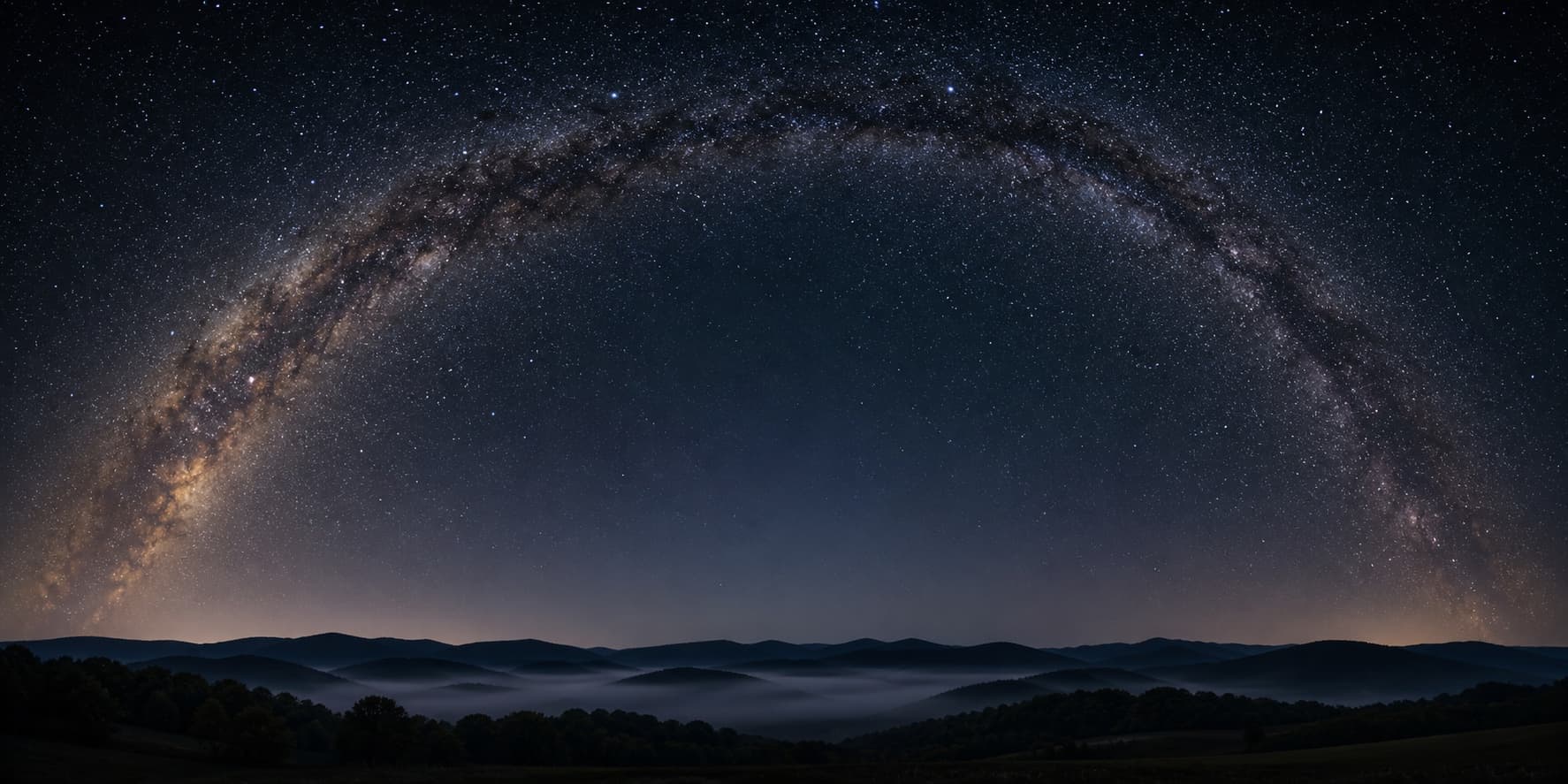
OK so a star map. Imagine the night sky, exactly the way it looked from one specific place, on one specific date, at one specific time — frozen.
That’s the whole concept. People have been making them for tens of thousands of years.
The version you can buy now is just a much prettier, much more accurate one. Usually a poster of the sky above the city where you met someone, or the night your kid was born, or the field where someone got down on one knee.
What a star map actually is
Imagine you’re standing in a field somewhere. Let’s say Florence, Italy.
It’s 11:42 p.m. on June 7, 1985. You look straight up.
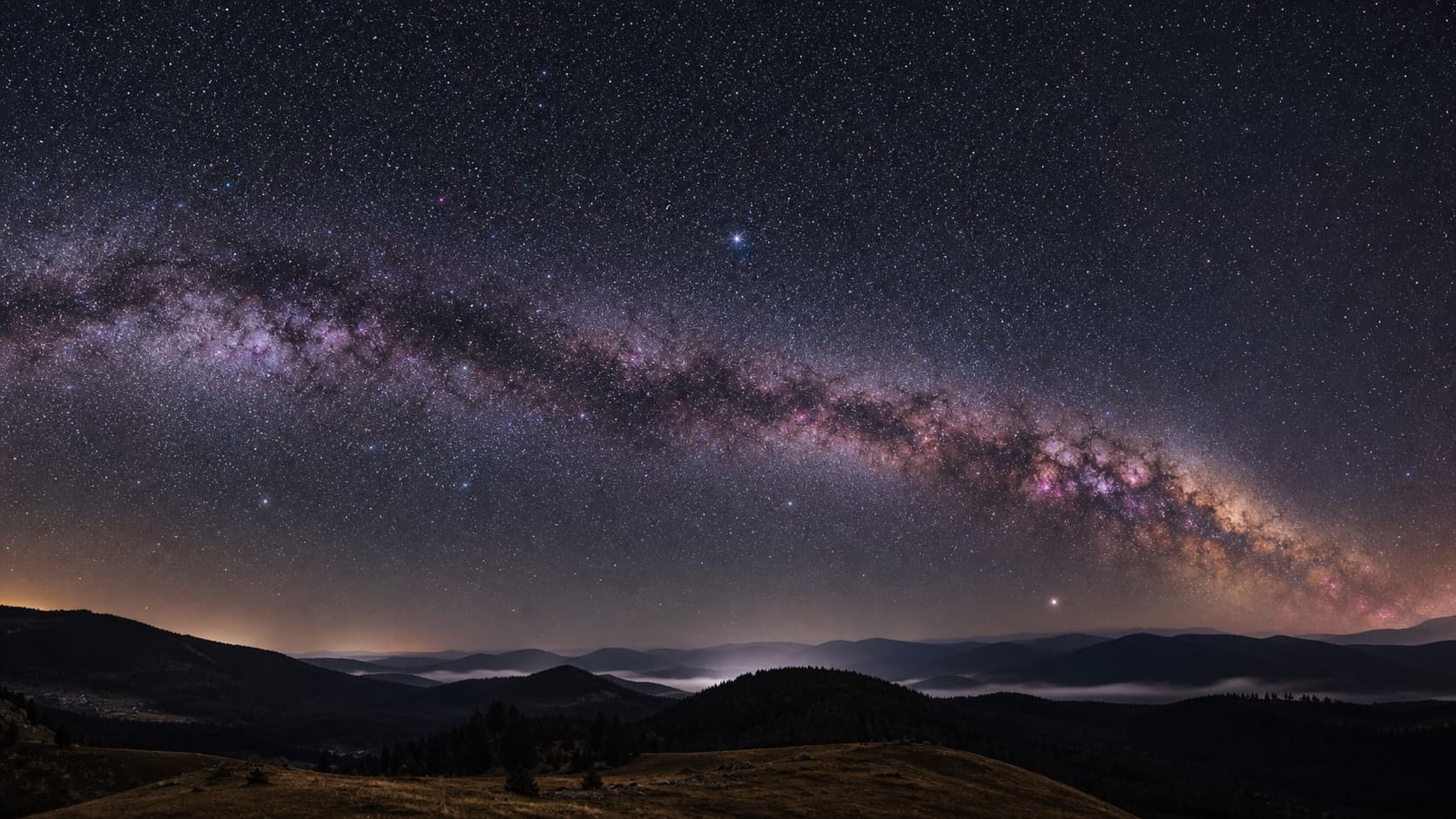
You see a specific thing: the Big Dipper at a certain angle, Jupiter sitting low in the south, Venus already set hours ago, and the Milky Way arcing across the sky in one particular direction.
That exact view? That’s a star map.
Anyone, anywhere, in any year, can look at the map and see what someone in Florence saw that summer night. The sky doesn’t change between viewings — physics doesn’t take days off.
And here’s the cool part: star maps don’t have to be of now. That’s their quiet superpower.
You can rewind the sky thousands of years, or fast-forward it to a date that hasn’t happened yet. The Earth tilts and spins and orbits the sun on a schedule we understand really well, so the math works in both directions.
You can render the sky for the day your grandfather was born.
You can also render it for the day your daughter graduates next May. Same math either way.
Where the word “star map” comes from
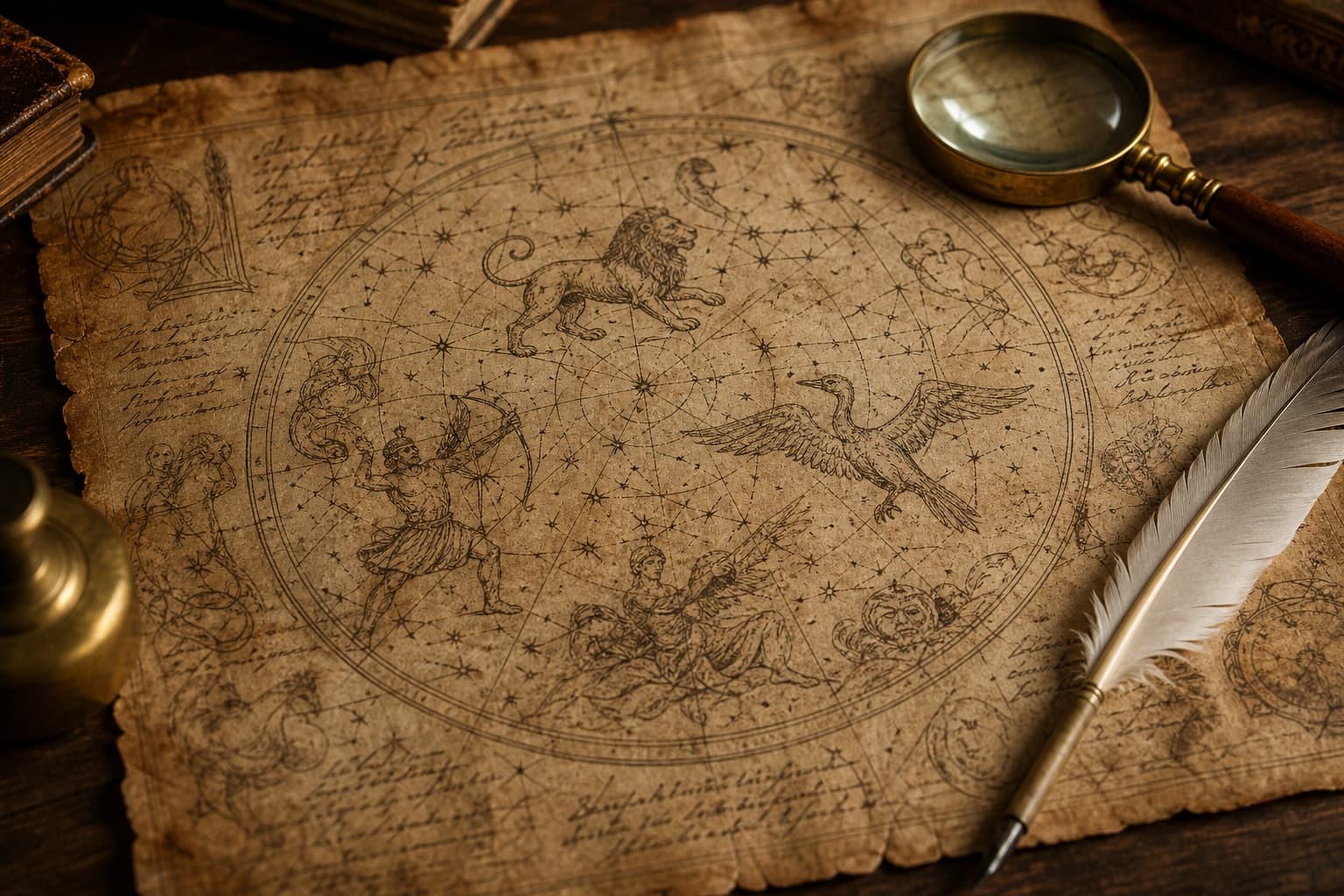
People have been drawing the sky as a map for a really long time. Like, before-writing long.
The earliest one we’ve found is a 32,000-year-old carved bone from a cave in France with what looks like the Pleiades on it.
Imagine being the person who made that. No paper, no light pollution, no real reason to do it, and you just decided the sky was worth documenting.
After that you get Bronze Age cultures from China to Mesoamerica recording constellations on clay, silk, and stone. Then around 150 AD, an astronomer named Ptolemy in Alexandria wrote down forty-eight constellations and the positions of more than a thousand stars in a single book.
Pretty much every Western star map for the next 1,500 years copied his homework.
What changed in the modern era isn’t the idea of mapping the sky. The idea is ancient.
What changed is the precision.
Old star charts are gorgeous, but they’re approximate. Modern personalized maps use the same math NASA uses to fly spacecraft around the solar system — which is probably overkill for a wall poster, but the alternative is making the stars up, and that just feels rude.
What a personalized star map is
A personalized star map (also called: custom star map, date star map, sentimental star map — the words are all over the place) takes the idea of drawing the sky and locks it to one specific moment in one specific person’s life.
The inputs are stupidly simple:
- A date. Usually a day that matters. Wedding day, birthday, anniversary, the day a kid was born, the day someone moved in, the day someone was lost — you get the idea.
- A time. Sometimes “evening” is fine, sometimes you want it down to the minute. The sky genuinely changes minute by minute, so the more specific you can be, the closer the map matches what was actually overhead.
- A location. A city is fine, or a specific neighborhood. The same date and time over Tokyo looks completely different from the same moment over São Paulo — the Earth is a sphere, so the sky depends on which bit you’re standing on.
Those three numbers — date, time, place — together describe one unique view of the universe. Plug them in, out comes a poster.
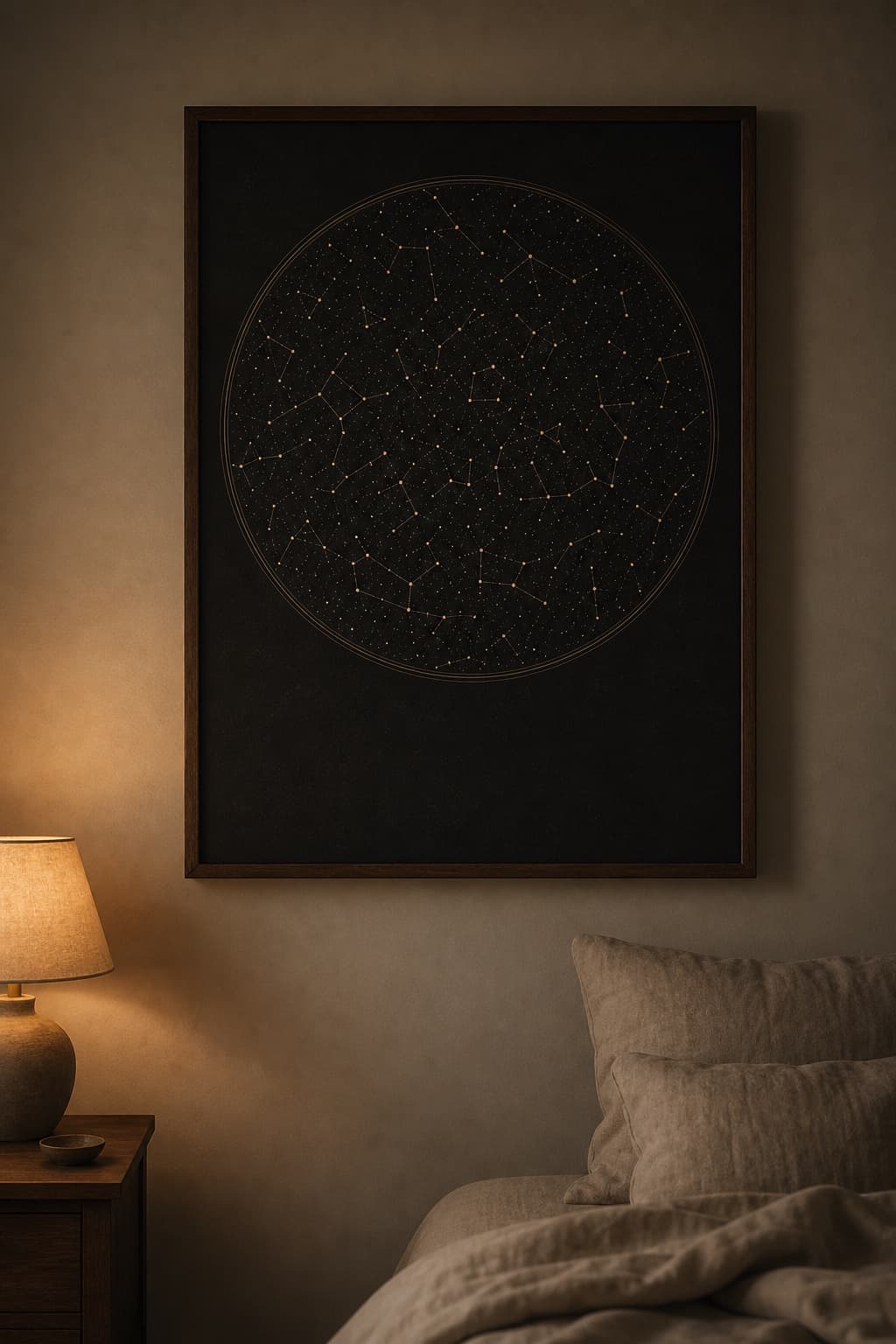
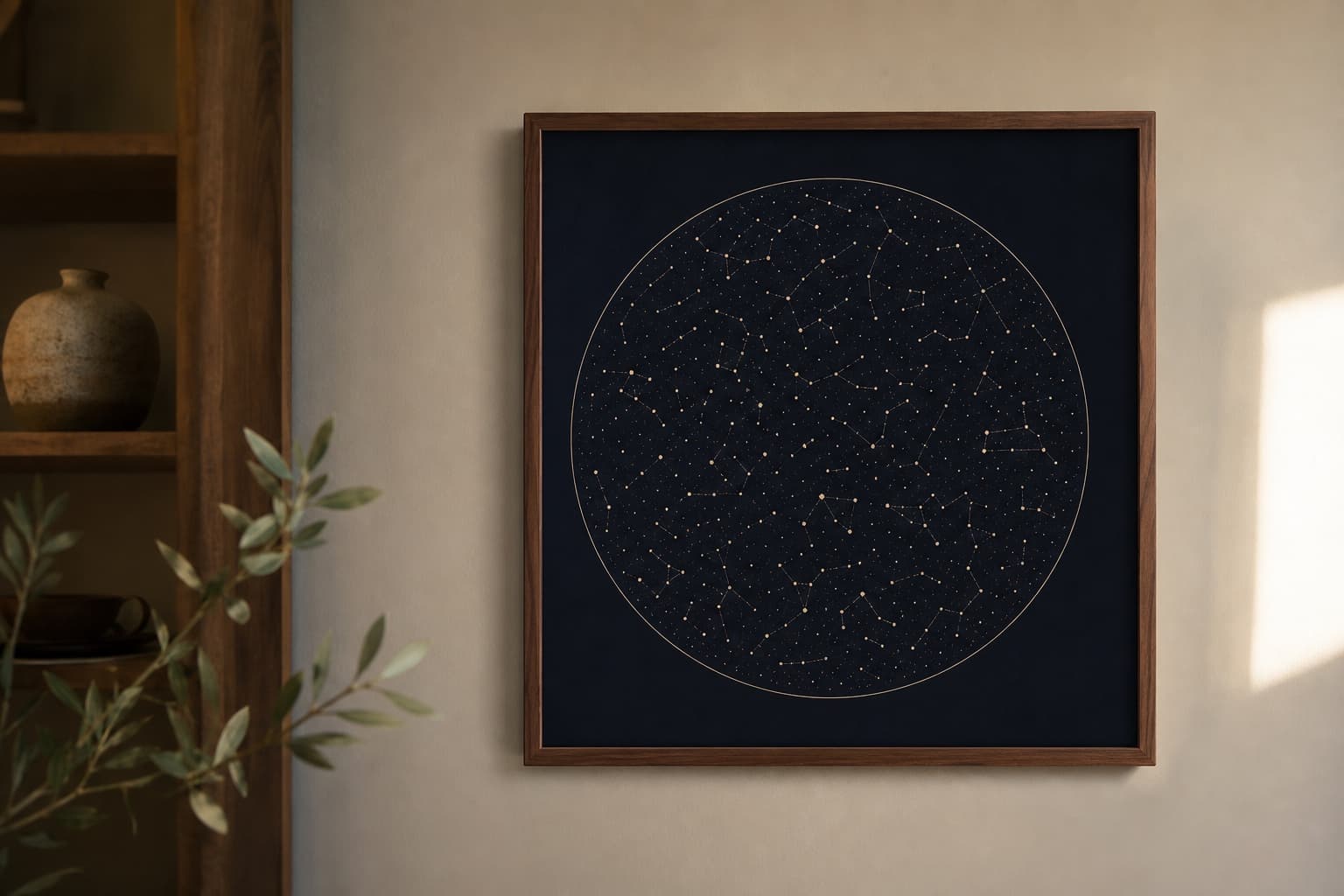
The print itself is usually pretty clean. A circular field of stars, sometimes with constellation lines drawn in, sometimes without.
Below the circle, a line of text: the place name, the date, maybe a short message. It looks like art because that’s what it is.
The whole thing is designed to be framed and hung on a wall — not laid out on a table like a navigation chart.
Why people give them as gifts
Personalized star maps are kind of a strange gift, the first time you see one. It’s not a photo.
It’s not a ring. It’s not chocolates.
It’s a picture of, technically, empty space.
But that turns out to be exactly what makes the gift work.
The whole universe was doing one specific thing while two people were saying their vows. The whole universe was doing one specific thing while someone was driving home with the news that the offer came through.
The star map turns that backdrop into a record.
What it really says, underneath everything, is: I paid attention to the moment. Or: I cared about this day enough to wonder what the sky looked like.
That’s the whole reason it lands.
The moments people most often pick:
- Anniversaries — the sky on a wedding day, or on the night you met
- Births — the sky on the night a child arrived
- Significant dates — moving day, the day a business opened, the day someone passed
- Milestones — graduations, first home, retirement
- In memoriam — the sky on the date of a loved one’s last day, or their birth
A photo of an event captures the people. A star map captures everything else that was happening at the same time.
Honestly kind of a humbling thing to put on a wall.
How a personalized star map is made
OK, behind the scenes there’s actually math. Sorry.
The very short version: software figures out where every star, planet, and the moon were at the exact date, time, and location you typed in, then draws those positions onto a poster.
The slightly longer version, in three steps:
- Time math. Convert the date and time you typed into universal time, taking into account whatever time zone applied to that place on that date. Time zones have shifted around more than you’d expect — your grandparents’ “9 p.m.” in 1955 might not line up with today’s 9 p.m. The software handles that part for you.
- Astronomy math. Take a catalog of about ten thousand stars bright enough to see with the naked eye, plus the eight planets and the moon, and calculate where each one sat from your location at your moment. This is the same math used to predict eclipses and land spacecraft, so — reasonably trustworthy.
- Rendering. Draw the calculated positions onto a circle, add constellation lines if you want them, add your text below, choose a style, done.
There’s no painting, no interpretation, no fudging anything to look nicer.
The stars sit where they actually sat. The constellations stretch where they actually stretched.
The Milky Way runs through whichever part of the sky it actually ran through that night. If the math says Mars was hidden behind the Earth, Mars doesn’t show up on your poster.
Want the data and math in more detail? We wrote a full deep-dive in How Star Maps Work, and a separate one on accuracy in Are Star Maps Accurate?
For a hands-on tour of what the inputs look like in practice, see How to Read a Star Map.
Or you can just try it. Plug any date and place into the SkyWhen customizer and the sky for that moment shows up in a few seconds — no payment, no signup, no commitment.
It’s the same astronomy data we use to print the real poster, just on a smaller screen.
What a star map is not
Quick clearing-up section, because the words around this stuff are a mess and people often arrive looking for one thing and find another.
A star map is not the same as an astrology chart (also called a birth chart, also called a natal chart — same idea, multiple names).
An astrology chart records where the sun, moon, and planets were sitting against the zodiac on your birthday, and uses that to make predictions about your personality and your love life. Mercury in retrograde, that whole world.
A star map records what someone could actually have seen overhead at one moment. No predictions, no personality reads, just astronomy.
Astrology is a belief system. A star map is the sky in math form.
A star map is also not the same as a star registry.
Some companies will sell you a certificate that “names a star after” someone for a fee. That name is recognized by exactly nobody.
The only group that officially names stars is the International Astronomical Union, and the IAU has never heard of Steve.
A star map is a poster of the real sky.
A star registry is a souvenir certificate with no scientific weight whatsoever. They’re not the same product, even if Google sometimes mixes them up.
And lastly — a star map is not just decoration.
It looks decorative, sure. Pretty enough to hang anywhere.
But the data behind it is exact. You can pull up free astronomy software like Stellarium, plug in the same date and place, and the stars will line up.
Try it. It’s a little eerie.
That accuracy is what makes the gift land. It’s not “a starry pattern that vaguely evokes the night you got married.”
It’s literally the night you got married, as the sky was. The actual sky.
From physics. Frozen.
A short note on the formats you’ll see
Star maps come in a few common shapes, which can confuse first-time buyers. Quick guide:
- Circular sky. The full visible sky drawn as a circle — what you’d see lying on your back in a field. The classic. Most popular by a lot.
- Heart shape. Same sky data, masked into a heart outline. Solidly wedding-and-anniversary territory.
- Square or rectangle. Sky data filling a clean square or vertical rectangle. Modern, gallery-friendly.
- Edge to edge. No disc at all — sky data to the paper’s edge. Very minimal, suits clean interiors.
Beyond shape, there are colors. The dark options: a near-black called Midnight and a quiet violet called Nebula.
And one for people who don’t want a dark print: Porcelain — warm white paper, with the night sky itself still black.
Same star data in all of them. The palette is just the wrapper.
The bridge: from idea to actual gift
Here’s where this stops being a definition and starts being useful.
A star map is a frozen moment, not decoration. The day that mattered, exactly as the sky was.
If there’s one specific date you can think of right now that you’d want on a wall, you can have it as a poster by tonight.
Put the date and the place into the customizer, pick a style, you’re done.
Takes about ninety seconds. The preview shows you exactly what you’ll get, and you can keep tweaking until it feels right.
Still gift-hunting and not sure if a star map is the right call for the person you have in mind? Personalized Star Map Gift Ideas has a list of the moments people most often pick, with what each one tends to look like printed.
FAQ
What is a star map used for?
Mostly gifts and decoration. They mark a date that mattered — a wedding, a birth, an anniversary — by capturing what the sky looked like that night.
Some people use them for educational stuff too, like showing a kid what was overhead the day they were born. (Kids tend to love this, in my experience.)
Older antique star charts were used for navigation and astronomy reference, but modern personalized maps are a sentiment product, not a working tool. You can’t navigate a ship with one.
What's the difference between a star map and an astrology chart?
A star map shows what the sky actually looked like at a date and place — every star and planet in its real position, as a photograph in math form.
An astrology chart records the same planet positions against the zodiac and uses them to make personality predictions and pick your dating advice.
Star maps = astronomy. Astrology charts = astrology. Different tools, different worldviews.
They look different on paper and they’re used for completely different things.
Are personalized star maps scientifically accurate?
A well-made one is, yes. The math is the same kind used to predict eclipses and aim spacecraft — so, very accurate.
Some cheap novelty prints use a generic starfield that looks the part but doesn’t actually match the real sky for the date entered. Worth double-checking before you buy.
We wrote a longer piece on this in Are Star Maps Accurate? if you want the full breakdown.
Can a star map be of a date in the past?
Yes — basically any past date in human history. The math will happily rewind the sky thousands of years if you ask it to.
Most people pick dates in the last century or so, just because that’s the range of family dates people want to mark.
But if you really want a poster of the sky over Babylon in 600 BC, the math is not going to stop you.
Can a star map be of a future date?
Yes. The same physics that lets us rewind the sky lets us fast-forward it.
People sometimes order maps of their wedding date months in advance, or of a baby’s projected due date.
The map is technically a prediction in that case, but physics being what it is, the actual sky on that future date will match.