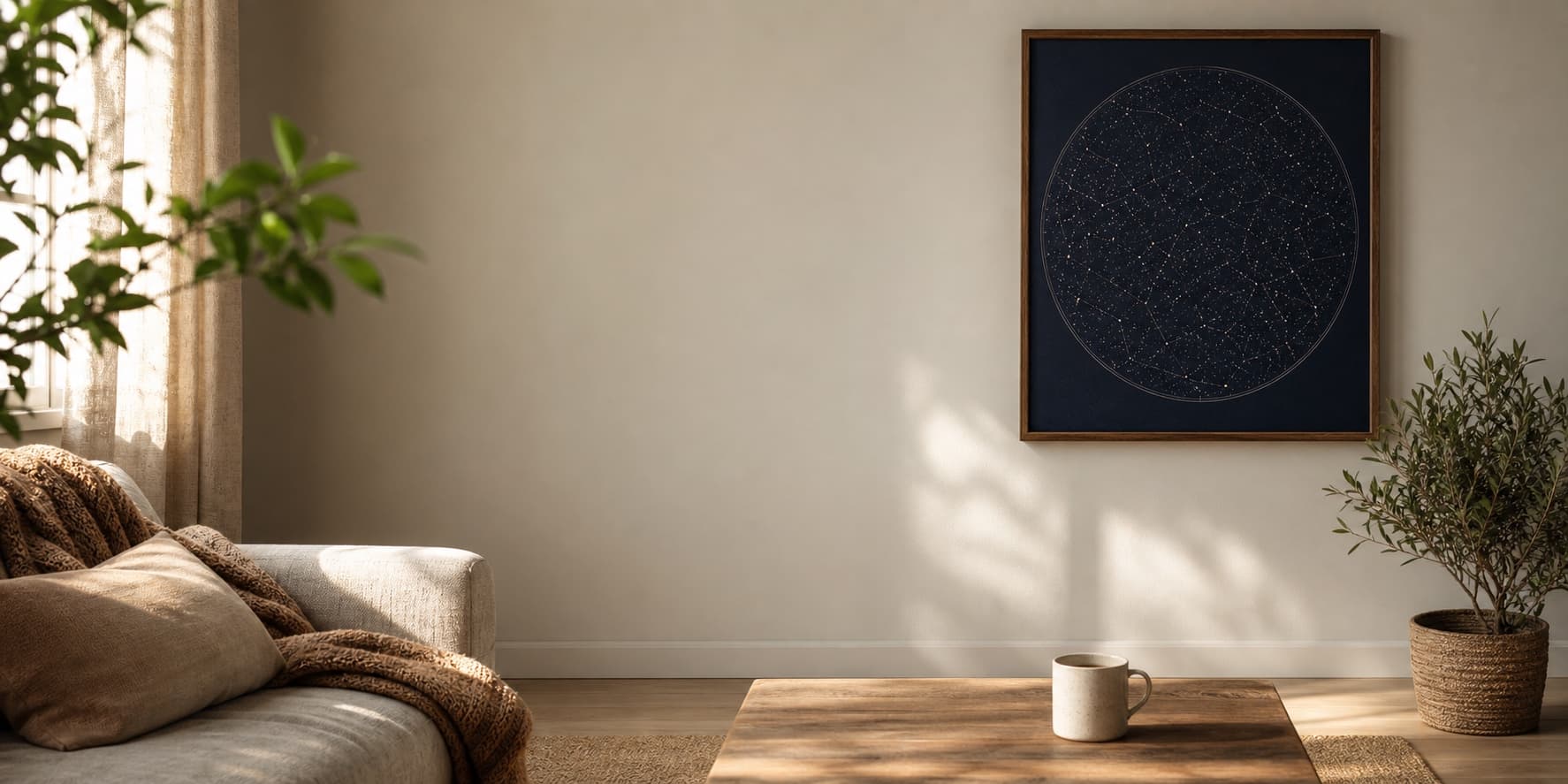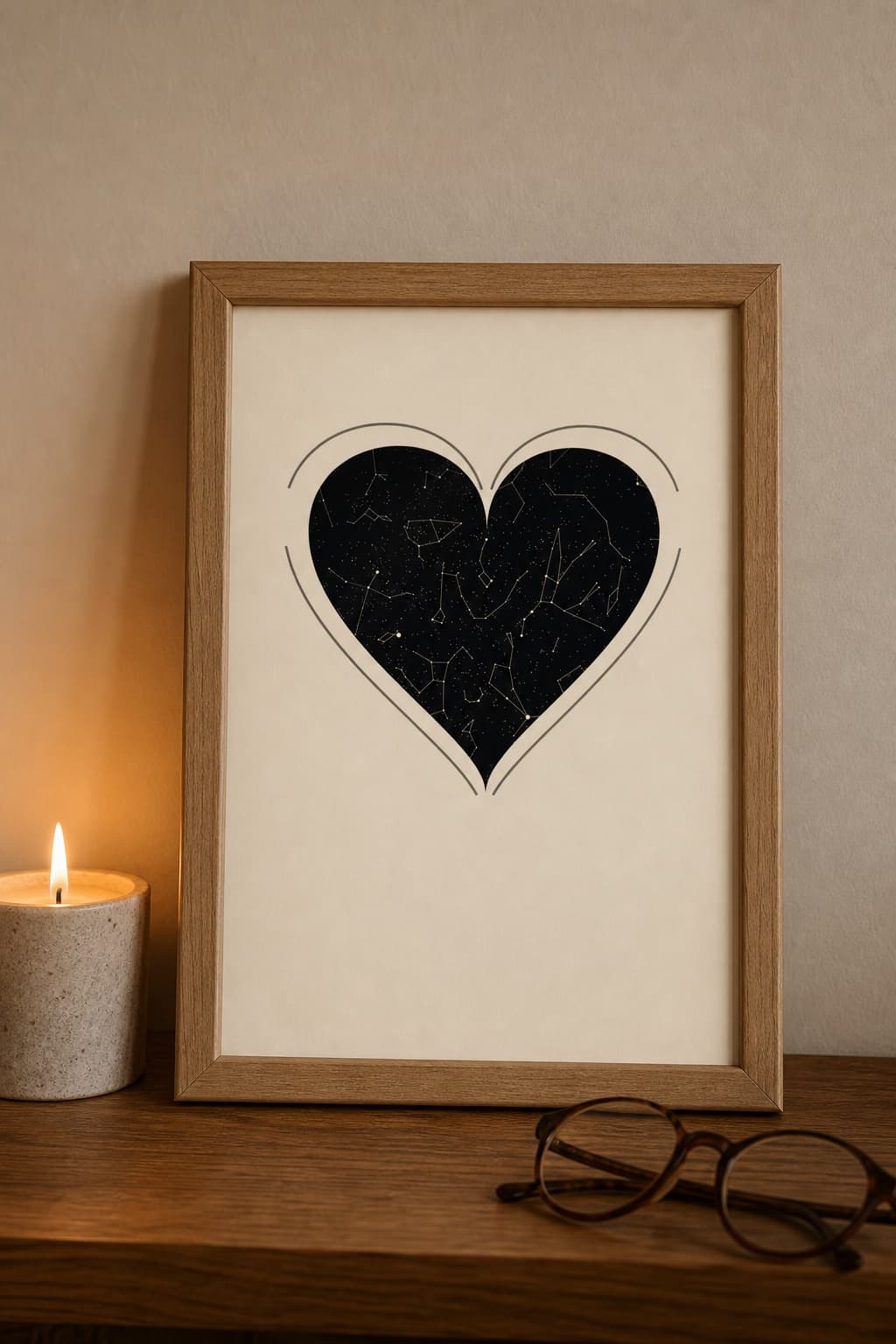
The hard part of losing someone is how quickly the small specifics go. The dates tend to stay.
A memorial star map holds on to one of them: the night sky on a date that mattered in their life, printed and framed, and kept somewhere they used to be.
Which date to choose
This is the question most families ask first, and it’s the most personal part of the decision. There’s no single right answer.
The night they were born
The most-chosen option, by a noticeable margin.
The birth-night sky frames the print as a record of the life rather than the end of it. The date is also documented, so there’s no ambiguity.
For older relatives — parents, grandparents — the birth night is often a date in an older era, which makes the print feel meaningfully different from any contemporary sky.
A date they cared about
Sometimes the right date isn’t the birth night or the date of passing — it’s a specific evening that meant something to the person in their life. Their wedding night, the day a particular child was born, the night they retired, an anniversary date from their happiest year.
This is the most personal option.
The print becomes specific to the person you’re remembering rather than to the universal event of birth or death. Worth talking with surviving family about, if you’re unsure.
The night they passed
Some families do choose this date — usually for a piece that’s kept private rather than displayed. The print becomes a marker of when they left rather than a celebration of when they were here.
Most families who consider this choose another date instead, but the option is valid if it feels right to the person commissioning the print.
Who commissions them
A surviving partner or spouse
The most common direction. After losing a partner, many people want a quiet visual record of a specific date — most often their wedding night or the partner’s birth night.
The print typically lives in the bedroom, study, or a quiet room of the home — not in the entryway or living room where guests pass.
Adult children
Children remembering a parent.
Often the parent’s birth night, sometimes the parents’ wedding night. Common gift direction in the year or two following the loss.
For larger families, several siblings sometimes commission copies of the same print — the same date, the same sky, hung in each adult child’s home.
A close friend
Less common, but a thoughtful direction. A friend marking the loss with a print given to the family at a time when the household is still adjusting.
What the print typically looks like
Shape
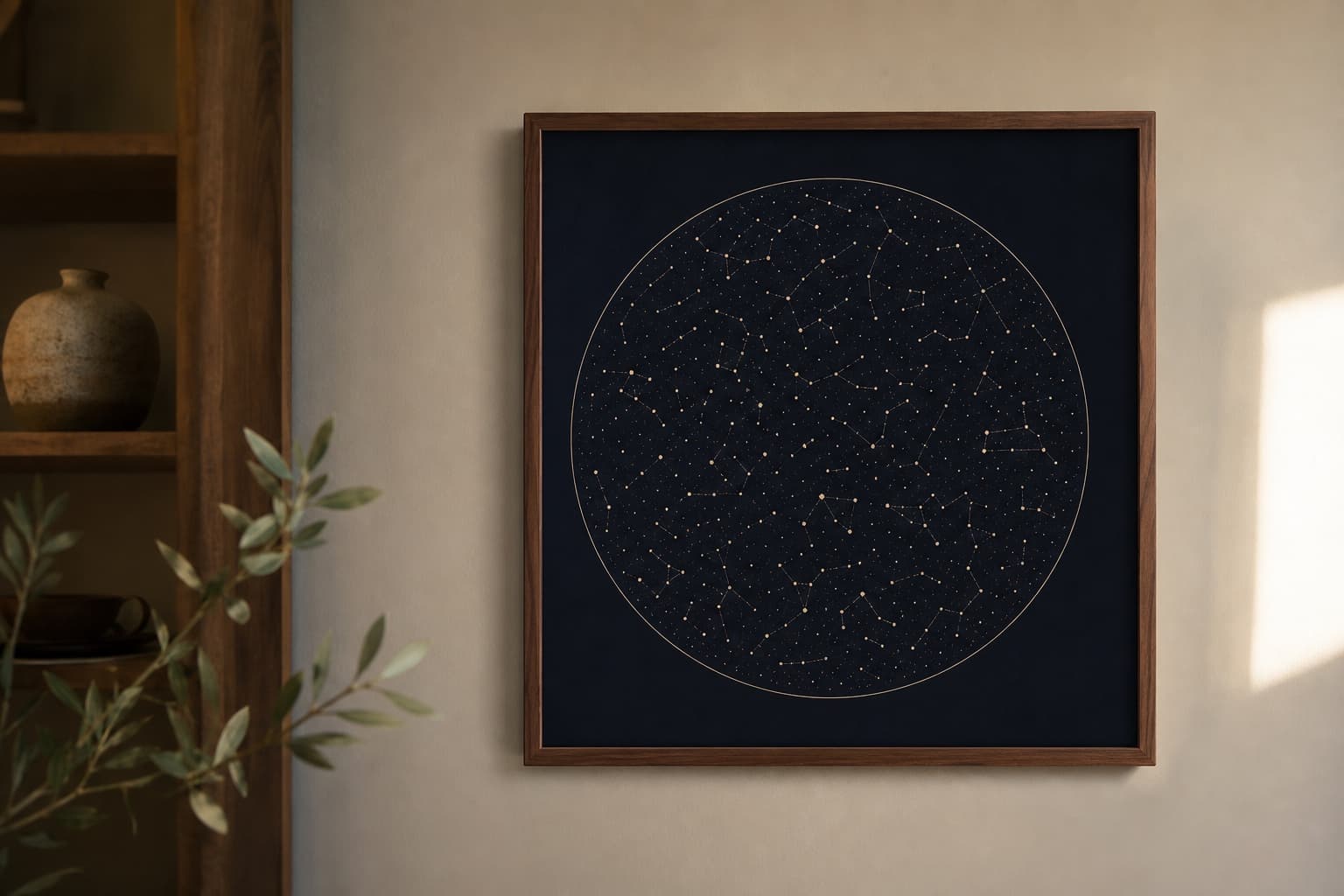
Circles are the dominant choice for memorial prints.
Quieter than the hearts, more closed-in than the edge-to-edge designs. The shape feels self-contained.
Palette
The dark designs dominate this category. Midnight (near-black with cream stars) and Nebula (a quiet violet) are the most common.
Porcelain, the light-paper option — which works beautifully for weddings and nurseries — feels slightly off for memorial purposes for most families.
Text
Quieter than other categories. Often a single name and a single date, nothing else.
Sometimes “In memory of” or “Remembered” as a single line. Sometimes a date range — birth and passing — on a single small line.
Long messages tend not to land here.
The most effective memorial prints are spare, almost minimalist. The sky carries most of the weight.
Size
Smaller than most other categories. 8×10 and 12×16 inches are the most common. Memorial prints aren’t typically meant to be statement pieces — they’re meant to be personal.
Things to think about before ordering
Talk with the family if you can
Memorial prints are deeply personal.
If you’re commissioning one for someone else — a recently bereaved friend, a parent who lost a sibling — a brief conversation about whether they’d want one matters. Not everyone does, and the wrong gift in a moment of grief can land badly even when well-intentioned.
For your own use, take your time
Some people commission memorial prints in the weeks after a loss. Others wait months or years.
There’s no right timeline. The sky from the chosen date doesn’t go anywhere — the print can be commissioned whenever it feels right.
The frame and the place matter
Plain frames, in dark or neutral materials, are the most common choice. Ornate gold frames or bright modern materials tend to feel mismatched.
Where the print lives in the home is part of the gift. Most memorial prints live in personal spaces — bedrooms, studies, hallways — rather than public ones.
The bridge: keeping someone you’ve lost
People who lose someone close often look for ways to keep them in the world without making a public display of the loss. A photograph is a photograph.
A voice note is a voice note. A star map of a specific date sits in a different register — it’s about the universe on a particular evening, not about the person directly, which makes it a quieter way to mark a life.
If you’re considering commissioning one, the customizer preview is free and there’s no obligation to order at the SkyWhen customizer. Looking at the sky from the chosen date — without buying anything — is sometimes enough on its own.
For accuracy questions, see Are Star Maps Accurate?. For broader gift framing, see Personalized Star Map Gift Ideas.
FAQ
What's a good memorial gift idea?
A star map of the person’s birth night, or a date that mattered to them in life, framed quietly and given to a surviving family member. Most families prefer this to a date-of-passing print.
Which date should I use for a memorial star map?
The most-chosen date is the person’s birth night. It frames the print as a record of their life rather than their end.
Alternatives: a date they cared about (a wedding night, their child’s birth, an anniversary), or — less commonly — the date of passing.
Is it appropriate to give a memorial star map to someone grieving?
Often, yes — especially if some time has passed since the loss. Memorial star maps are personal, so a brief conversation with the recipient first (or with someone close to them) helps confirm it’s the right kind of gift for that person.
How should a memorial star map look?
Spare. Most memorial prints use a circle, a dark design (Midnight or Nebula), a quiet frame, and very minimal text — often just a name and a date.
Where should the print be hung?
Usually in a personal space — a bedroom, a study, a quiet hallway. Most families don’t hang memorial prints in entryways or dining rooms. The point is that it’s there for the people who want it, not on display for guests.