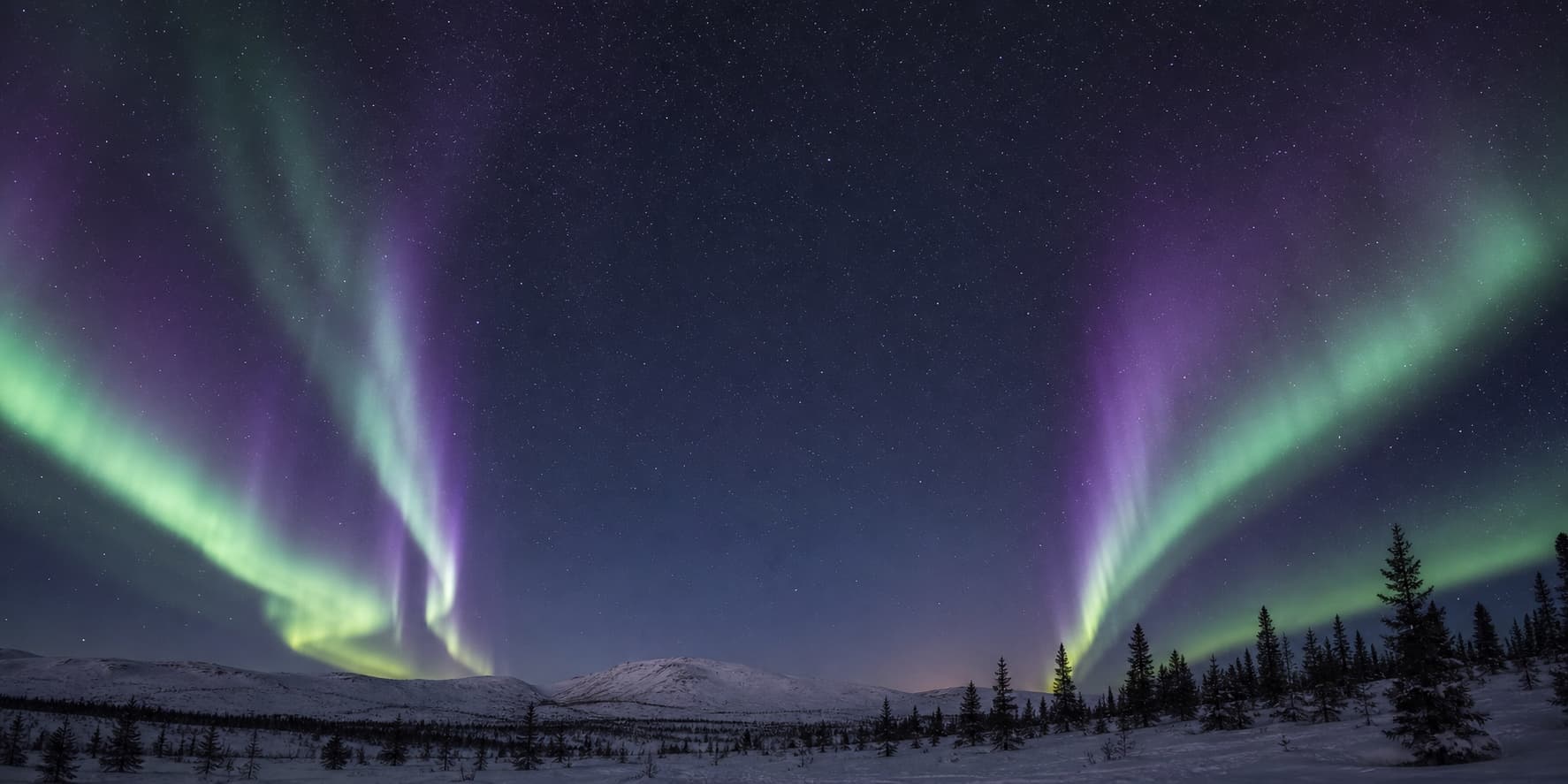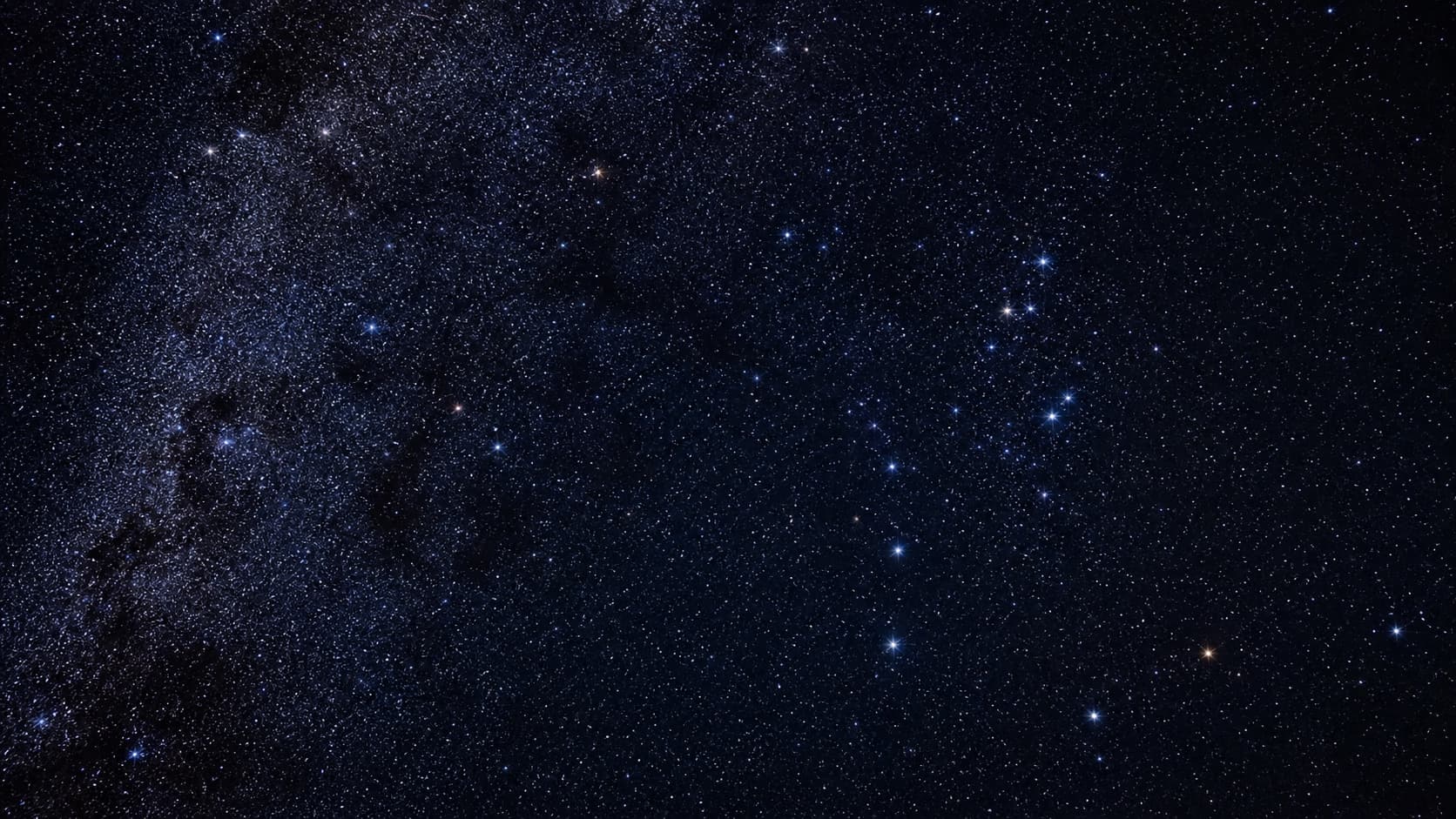
Stand in Sydney and look up at midnight.
Stand in New York at the exact same UTC moment and look up. You’re seeing almost completely different skies — different bright stars, different constellations, different shape of the Milky Way, even the moon at a different angle.
The Earth being a sphere is the reason.
Different parts of the planet face different patches of the universe. Once you understand the geometry, the whole hemisphere divide makes intuitive sense — and so do a lot of practical consequences for stargazing, navigation, and personalized star maps.
Why hemispheres see different skies
Imagine the Earth as a basketball.
Pin one observer to the top half (Northern Hemisphere) and another to the bottom half (Southern Hemisphere). Each observer’s head points outward from the center of the planet.
The sky each one sees is the half of the universe their head is pointing toward at that moment. Because their heads point in different directions, they see different halves.
At any given instant, an observer on the equator can see slightly different sky from an observer at the pole, but they share most of it. An observer in Sydney and an observer in Reykjavik on the same moment see almost no overlap at all.
The celestial sphere
Astronomers use a useful imaginary construct called the celestial sphere — a giant glass dome around the Earth, with every star pinned to the inside of the dome.
The North Celestial Pole is the point on the dome directly above the Earth’s North Pole; the South Celestial Pole is directly above the South Pole.
Northern Hemisphere observers see the stars near the North Celestial Pole as year-round residents of their sky — never setting, just rotating around the pole. Those same stars are permanently below the horizon for Southern Hemisphere observers — they never rise from a Sydney back yard.
What you see from the Northern Hemisphere
Polaris — the North Star
The defining feature of the Northern sky. Polaris sits almost exactly at the North Celestial Pole, which means it appears nearly motionless while every other star wheels around it across the night.
From the Northern Hemisphere, Polaris is always due north. It’s been used as a navigation anchor by sailors and travelers for thousands of years.
From south of the equator, Polaris is below the horizon and invisible.
The Big Dipper and Ursa Major
The Big Dipper is one of the most recognizable patterns in the sky — seven bright stars in a saucepan shape, part of the larger constellation Ursa Major.
From most of the Northern Hemisphere, it’s visible year-round and serves as the most common pointer to Polaris (the two outer stars of the bowl line up to the North Star).
From the Southern Hemisphere, the Big Dipper is invisible — the entirety of Ursa Major sits below the horizon.
Cassiopeia and the Northern circumpolar stars
Cassiopeia (the W) sits on the opposite side of Polaris from the Big Dipper. Together, they orbit the North Celestial Pole — visible from anywhere in the Northern Hemisphere, all year long.
Orion (visible from both hemispheres)
Orion is a special case: it straddles the celestial equator, which means it’s visible from essentially everywhere on Earth.
In the Northern Hemisphere it’s a winter-evening landmark, sitting in the southern sky. In the Southern Hemisphere it appears in the summer evening sky, sitting in the northern sky — and looking visibly “upside down” relative to its Northern Hemisphere orientation.
What you see from the Southern Hemisphere
The Southern Cross (Crux)
The southern equivalent of the Big Dipper — the single most recognizable constellation in the southern sky. It’s small (the smallest of the eighty-eight modern constellations), but unmistakable.
The Southern Cross appears on the flags of Australia, New Zealand, Brazil, Papua New Guinea, and Samoa. From the Northern Hemisphere it’s essentially invisible — you have to travel south of about 25 degrees north latitude to see it climb above the horizon.
No southern pole star
The Southern Hemisphere doesn’t have a bright pole star equivalent to Polaris. The faint star Sigma Octantis is closest to the South Celestial Pole, but it’s barely visible to the naked eye.
Instead, southern observers use the Southern Cross plus the two bright Pointer stars from Centaurus to indicate south. Drawing a line through the long axis of the Cross and extending it four-and-a-half times its length gives an approximate position of the South Celestial Pole.
The Magellanic Clouds
Two faint, fuzzy patches in the southern sky are the Large Magellanic Cloud and the Small Magellanic Cloud — small companion galaxies of our Milky Way.
Both are naked-eye visible from dark southern sites, and both are invisible from most of the Northern Hemisphere. They appear in southern personalized star maps naturally, the same way the Andromeda Galaxy can appear in northern ones.
Centaurus and the closest neighbors
The constellation Centaurus, prominent in the southern sky, contains Alpha Centauri — the closest star system to our sun. From Northern Hemisphere observers, Centaurus and Alpha Centauri are basically invisible.
One of those quiet ironies: the nearest stars to Earth can’t be seen from half of Earth.
What both hemispheres share
Some sky features appear from anywhere on Earth, just at different angles depending on where you stand.
The moon, the sun, and the planets
All of these travel along the ecliptic — the path the sun takes across the sky. From any latitude, you can see them, though they may appear higher or lower in your sky depending on the season and your latitude.
A full moon visible from Argentina at midnight is the same full moon visible from Italy at the same UTC instant — just sitting at a different angle relative to each observer’s horizon.
Orion, Scorpius, and the zodiac constellations
All zodiac constellations sit along the ecliptic and are visible from both hemispheres in their seasons. The angle changes — Orion looks “upright” from the Northern Hemisphere and “upside down” from the Southern — but the same stars appear.
The Milky Way
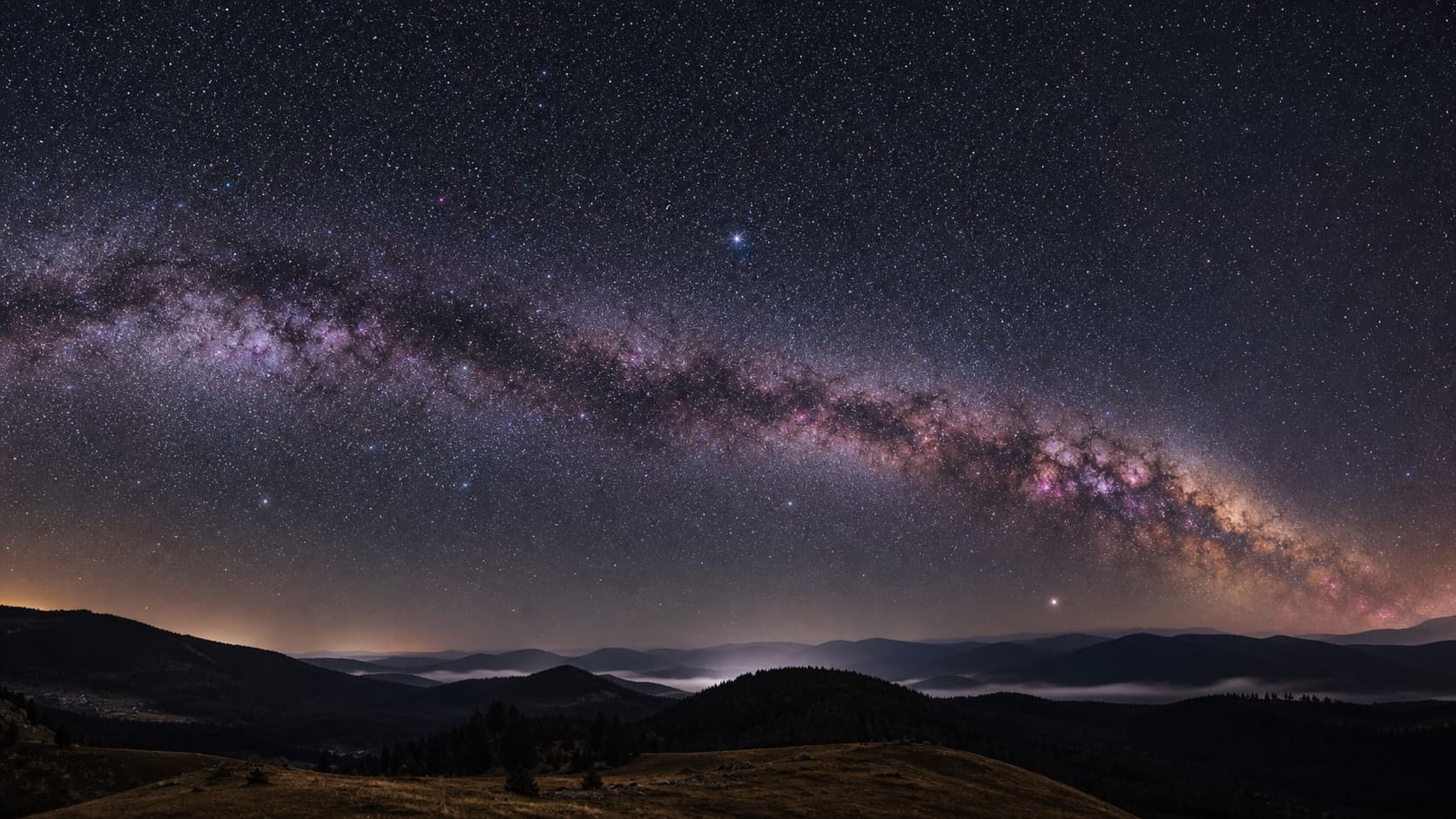
Visible from both hemispheres, though the bright galactic core is much higher and brighter from southern latitudes. The dark sky sites of Chile, Namibia, and rural Australia are some of the best Milky Way viewing on the planet for exactly this reason.
What this means for a personalized star map
The hemisphere divide isn’t academic for star maps — it’s the most visible practical consequence of how the math works.
The location is doing most of the work
People sometimes overlook the location input on a personalized star map, assuming the date is what really matters. The date determines which way the Earth is pointing in its orbit, yes — but the location determines which slice of Earth gets that view.
Two maps with the same date and time but locations in opposite hemispheres look completely different. The constellations are different.
The Milky Way sits at a different angle. The visible planets may not even overlap.
Northern-Hemisphere-default templates aren’t accurate for the south
A few low-quality star map products use a fixed Northern-Hemisphere-style template for all orders, regardless of where the customer’s date is. If you order a star map of a wedding in Auckland and the print shows the Big Dipper and Polaris, the map wasn’t calculated — it was decorated.
We covered the “is the map real or fake” question in detail in Are Star Maps Accurate?
The orientation convention flips
Northern Hemisphere maps typically place north at the top of the circle, because that’s where Polaris and the most-famous northern stars sit. Southern Hemisphere maps typically place south at the top, because that’s where the Southern Cross and the bright southern stars live.
This isn’t a mistake; it’s a stylistic choice that puts the most recognizable stars in the most visually prominent part of the print.

The bridge: capture the right half
A good personalized star map captures the sky from one specific spot.
That’s the whole point. If the recipient was born in Buenos Aires, the print should show the sky over Buenos Aires — with the Southern Cross, Alpha Centauri, and the Magellanic Clouds, not a default Northern-template sky.
See it for yourself. Plug in a date and try two cities, one in each hemisphere, in the SkyWhen customizer .
The previews will look like two different planets. They’re the same one.
The math behind it is in How Star Maps Work, and the broader explainer is in What Is a Star Map?
FAQ
Are the stars different in the Southern Hemisphere?
Partly. A wide band of stars is shared, but each hemisphere has stars the other never sees. That is because the Earth is a sphere, and two observers on different halves of the sphere have their heads pointing in different directions. They’re literally looking at different patches of the universe.
Some sky features (the sun, moon, planets, zodiac constellations) are visible from both, but at different angles. Others (Polaris in the north, the Southern Cross in the south) only show up in their own hemisphere.
Can I see the Big Dipper from Australia?
No — the Big Dipper is entirely below the horizon from most of Australia. You’d need to travel as far north as the northern tip of Queensland to glimpse part of it briefly low in the sky.
The Southern Hemisphere equivalent landmark is the Southern Cross, which the Northern Hemisphere can’t see for the same reason.
Is there a Southern Hemisphere version of the North Star?
Not really — there’s no bright star sitting at the South Celestial Pole. The closest visible star is Sigma Octantis, which is too dim to use as a casual navigation anchor.
Southern observers use the Southern Cross plus the two bright Pointer stars from Centaurus to find south instead.
Does the Milky Way look different from each hemisphere?
Yes — the bright galactic core is much higher in the southern sky than the northern. Some of the world’s best Milky Way viewing happens in Chile, Namibia, and rural Australia for exactly this reason.
On a personalized star map, the Milky Way is rendered to match where it actually was overhead from your chosen location and date.
How do I know if a star map is using the right hemisphere?
A real personalized map calculates from the latitude and longitude you give it — so a Buenos Aires sky will show southern constellations, and a Berlin sky will show northern ones.
A telltale sign of a decorative fake is the same Northern-template sky appearing on every order regardless of city. Comparing the preview against Stellarium for the same date and location catches this quickly.