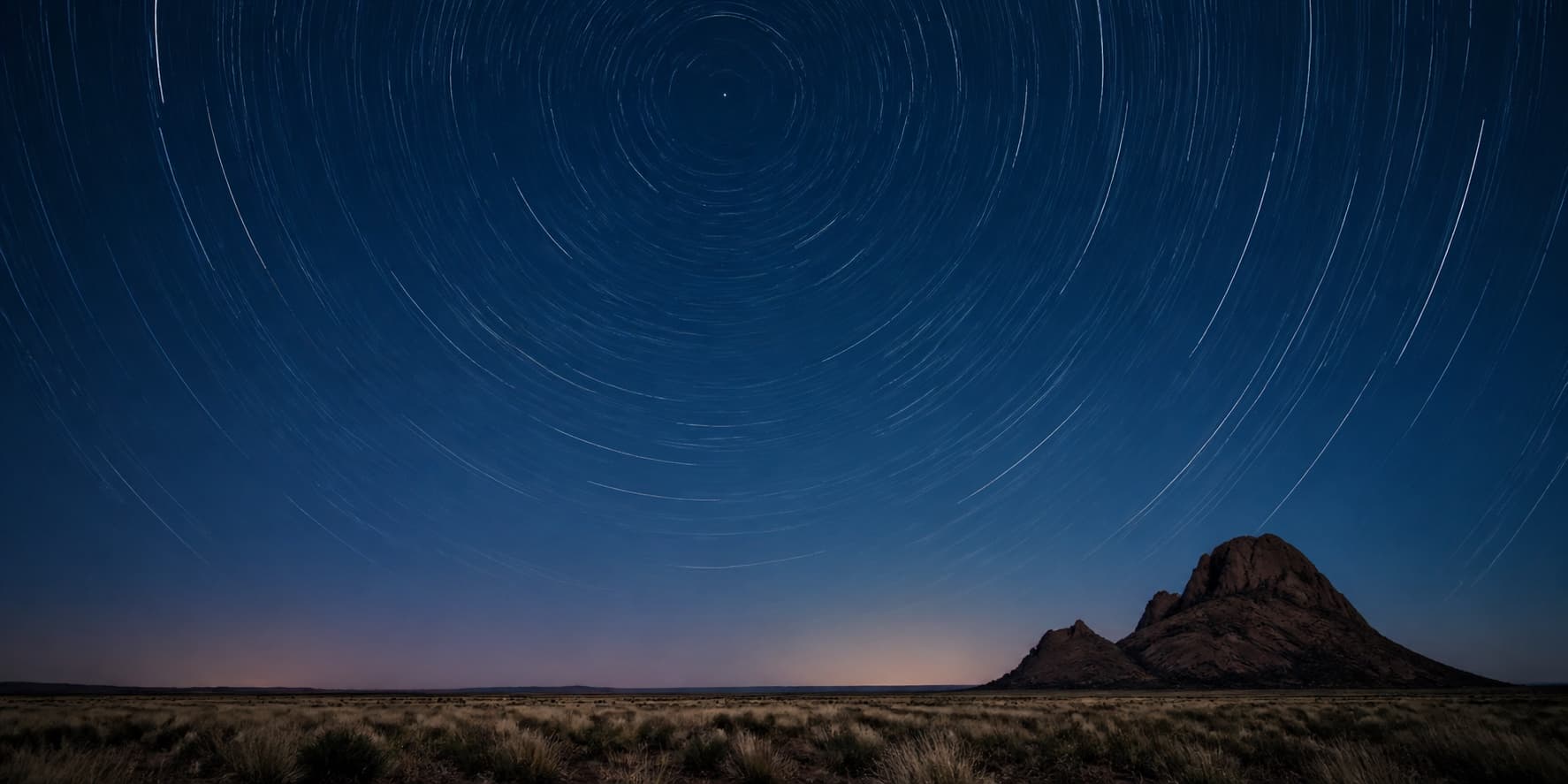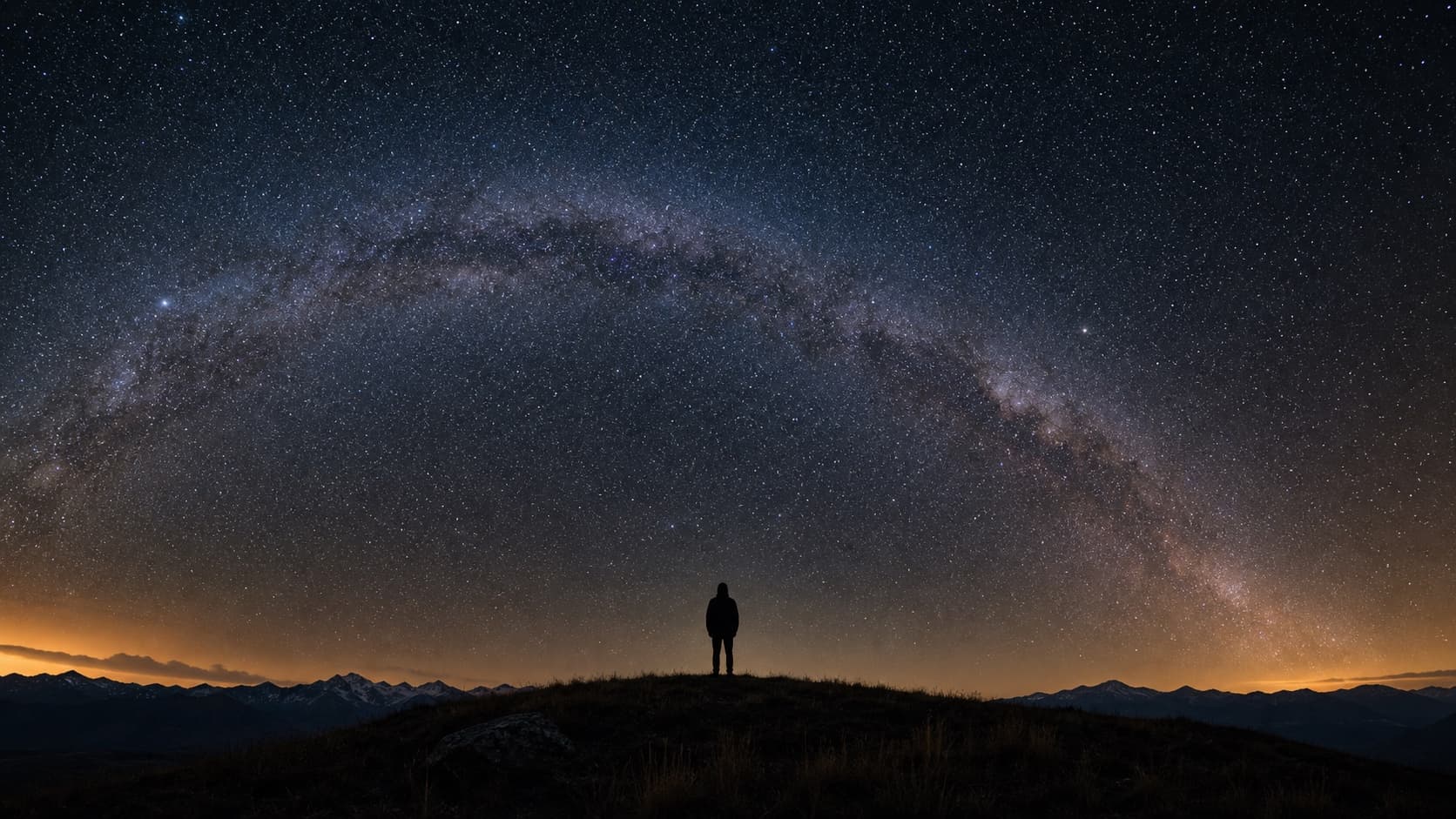
The night sky changes every clear evening.
Different planets show up, the moon waxes and wanes, the seasonal constellations rotate slowly through. Most of it is genuinely visible from a back yard, no telescope required.
Here’s how to find what’s up tonight from where you are, using just your eyes and (optionally) a free phone app.
That’s the live version — your sky, this minute, using the same engine as the rest of SkyWhen. For the full standalone page with planet details and a permanent URL, see skywhen.com/tools/sky-tonight.
The four predictable things in the sky tonight
On any given clear night, four kinds of sky objects are visible from almost anywhere: the moon (when it’s up), the brightest planets, the season’s big constellations, and the occasional special event.
None of them require equipment. The faintest of the predictable bright objects is still about a hundred times brighter than the dimmest star you could possibly see.
The moon
The moon is up for about half of every day, on a roughly monthly cycle of phases. A new moon is invisible (rising and setting with the sun); a full moon rises at sunset and sets at sunrise; the in-between phases stretch across the night in predictable ways.
On a full-moon night, the moon is a brilliant disk that drowns out fainter stars but makes the brighter ones still very visible. On a new-moon night, the sky is at its darkest and you can see the most stars.
Both kinds of night are worth being outside for. Different aesthetics, different visible objects.
The naked-eye planets
Five planets are visible without a telescope: Venus, Jupiter, Mars, Saturn, and (with difficulty) Mercury.
- Venus is the easiest. When it’s up, it’s the brightest point of light in the sky after the sun and moon. It only ever appears in the western evening sky or the eastern morning sky.
- Jupiter is the second-brightest planet. Bright, steady, and visible for most of every year.
- Mars is unmistakable when bright — it glows clearly orange-red, the only orange “star” in the sky. Its brightness varies a lot from month to month.
- Saturn is bright but not as bright as Jupiter or Venus. It has a steady, slightly yellow tint.
- Mercury is the hardest because it stays close to the sun and is only visible for short windows around sunrise or sunset.
On most clear nights, at least one of these is up. We wrote the full how-to-identify guide in How to Identify Bright Stars and Planets.
The seasonal constellations
Different constellations dominate the sky in different seasons, because the Earth faces a different direction in space throughout its orbit.
From the Northern Hemisphere, the rough seasonal anchors are:
- Winter: Orion the Hunter dominates the southern sky in the evening. The Big Dipper sits low to the north.
- Spring: Leo the Lion is overhead. The Big Dipper climbs high.
- Summer: Three bright stars overhead (Vega, Deneb, Altair) form the Summer Triangle. The Milky Way’s bright core is visible from dark sites.
- Autumn: The Pegasus square is overhead, with the Andromeda Galaxy nearby. Cassiopeia sits high in the north.
Southern Hemisphere observers see Orion in summer instead of winter, and the Southern Cross dominates the year-round (it’s the southern equivalent of the Big Dipper’s landmark role).
Special events
Some nights are extra worth being out for.
The annual meteor showers (Perseids in August, Geminids in December, Quadrantids in early January) reliably put on a show every year. Lunar and solar eclipses, aurora displays from strong solar storms, and rare planetary alignments all qualify.
We’ll cover those in a separate post; for now, the takeaway is that any given month has at least one minor event worth tracking down.
How to look up what’s up tonight from your spot
The fastest way to find out exactly what’s visible tonight from your specific location is a free planetarium app or website. A few that are reliable, plain, and free:
Stellarium Mobile (and Stellarium Web)
Stellarium is the same free planetarium software used for verifying personalized star maps. The mobile app is excellent — point it at the sky, and it identifies what you’re looking at in real time.
The browser version at stellarium-web.org works the same way without an app install. Pick your location, pick “now,” and the live sky appears.
Sky Tonight, Star Walk 2, and SkySafari
Several commercial apps offer a more polished interface for the same task. They have free tiers and paid upgrades.
For someone who’s genuinely curious, any of them does the job. The differences are mostly cosmetic.
Time and Date and In-the-Sky.org
For the “what’s special tonight” question rather than the “what stars are up” question, two websites are particularly clean references. They list astronomy events for any chosen date and location, including meteor showers, eclipses, and planet visibility windows.
The identify-what-you’re-seeing trick
You can do a lot of this without any app. The two cheats below cover most amateur stargazing.
The twinkle test
Stars twinkle.
Planets don’t (mostly). The reason is atmospheric — light from a distant point source gets distorted as it passes through Earth’s atmosphere, but planets are technically small disks (because they’re close), and their light is steady enough that the twinkle averages out.
If you see a particularly bright “star” that’s sitting completely steady while the surrounding sky shimmers, it’s probably a planet.
The brightness rule of thumb
The brightest non-flashing point in the sky after the sun and moon is, in order of likelihood: Venus, Jupiter, Sirius, Mars (when bright), Canopus (Southern Hemisphere), Saturn, Vega, Capella, Arcturus.
If something is overwhelmingly bright low in the western evening sky just after sunset, it’s Venus.
If something steady and bright is high in the sky around midnight, it’s most often Jupiter. If it’s orange and bright, it’s Mars.
What to do once you’re outside
Three things help a lot for actually seeing the night sky from where you live:
Let your eyes adapt
Human eyes take about twenty to thirty minutes to fully adapt to darkness.
Step outside, look at the sky, and stay outside. After five minutes you’ll see more stars; after fifteen, the dimmer constellation outlines start to appear.
One look at your phone screen resets the whole adaptation. If you need light, use a red-flashlight app or your phone’s red filter mode.
Get away from direct light
Even a backyard porch light defeats stargazing. Walk around the side of the house where there’s no direct light hitting your eyes, and you’ll see two or three times more stars within a minute.
Full darkness (a Bortle 1 or 2 site, the technical term for the darkest skies) requires getting out of cities entirely. But you can see plenty from a suburban driveway with the porch light off.
Look for the easy targets first
Find the brightest object first, identify it, then work your way outward. The moon (when up) is obvious.
The brightest planet is next. From there, the brightest star, then a recognizable constellation, then the dimmer surroundings.
This is the same logic the eye uses naturally. Don’t try to identify a faint constellation first — orient on the bright stuff first.
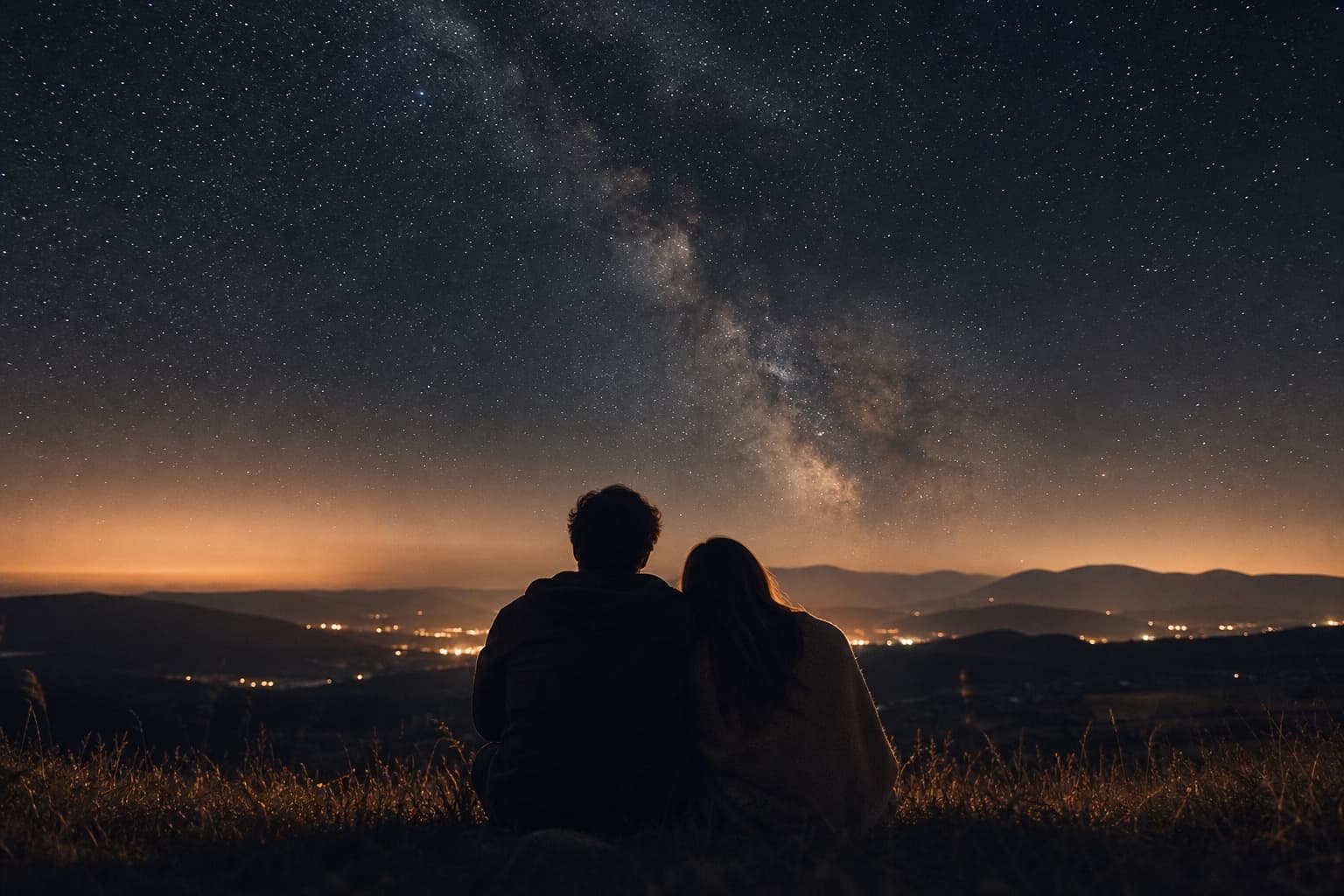
The bridge: tonight is a sky too
Most people think of personalized star maps as something you make for a date in the past. They’re right — the most common dates are anniversaries, births, and engagements that already happened.
But tonight is also a sky.
And tomorrow night is a different one. Some nights genuinely deserve a poster — the night you proposed, the night you watched the eclipse, the night your kid first noticed a constellation.
The same math works for tonight as for 1969. You can render the sky from your own back yard, right now, in the SkyWhen customizer .
It’s free to try — the preview shows the real sky for whatever date you give it.
Or if you’re still exploring the basics, What Is a Star Map? is the broader explainer that ties all this back to the printed poster idea.
FAQ
What planets are visible in the sky tonight?
Usually one to four of the naked-eye planets (Venus, Jupiter, Mars, Saturn, Mercury) are visible from your location on any given clear night.
The specific lineup changes month by month as the planets follow their orbits. Free tools like Stellarium Mobile, Sky Tonight, or Time and Date will list exactly which planets are up tonight from where you are.
What's the brightest object in the night sky tonight?
After the moon, the brightest object in the sky on most nights is Venus (when it’s visible) or Jupiter. Both of them outshine every star.
If neither is up, the brightest point is Sirius — the brightest actual star in the night sky.
Do I need a telescope to enjoy the night sky?
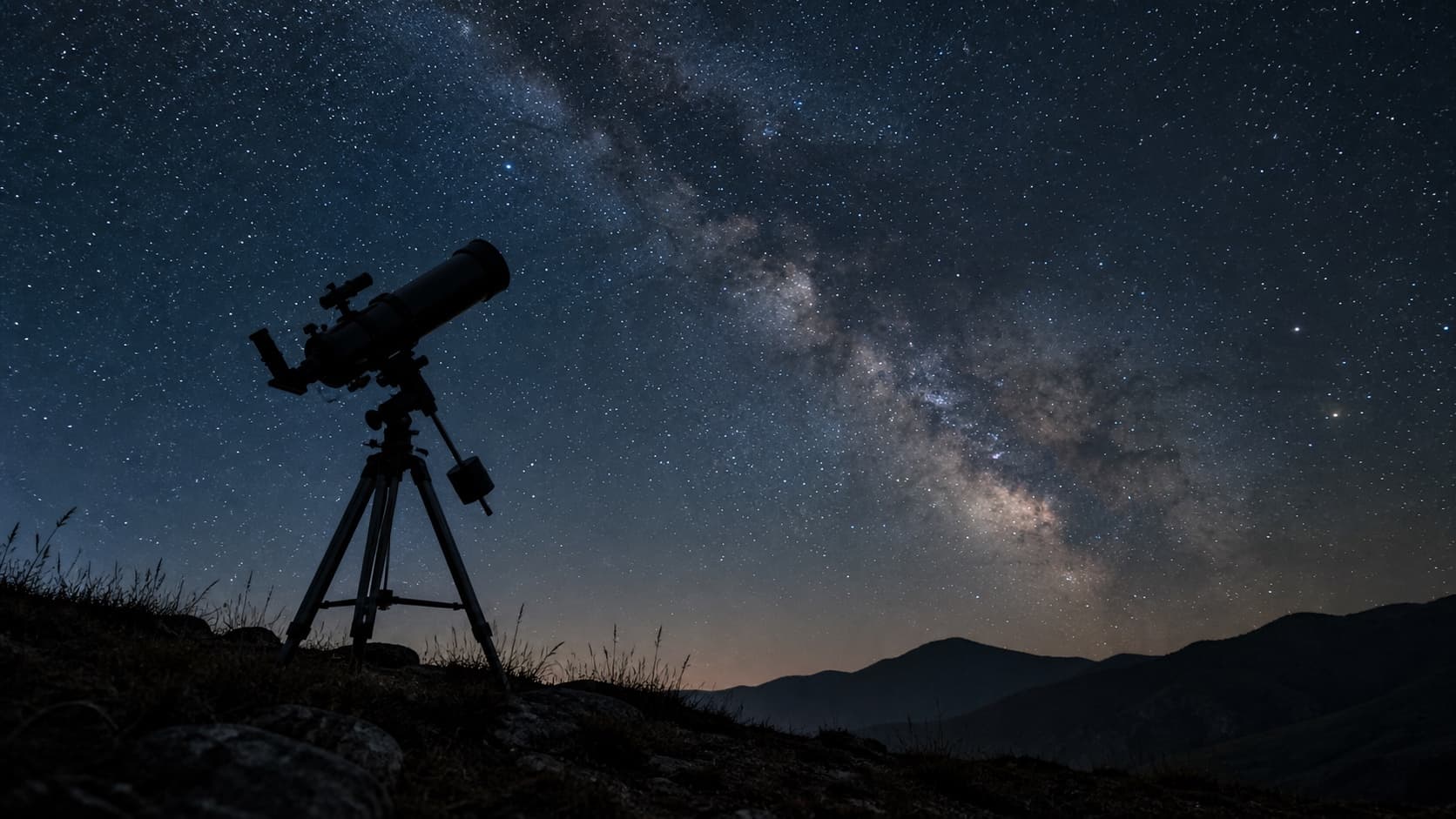
No. Every object discussed in this post is visible to the naked eye, and binoculars (if you have any pair lying around) get you most of the way to a cheap telescope’s view of the moon and bright planets.
Telescopes become useful for seeing Saturn’s rings, Jupiter’s moons, and faint deep-sky objects like nebulae. For learning the sky, your eyes alone are plenty.
What's the best free app to identify what's in the sky tonight?
Stellarium Mobile is the consensus pick — same software used by astronomers, free version is fully functional.
Sky Tonight, Star Walk 2, and SkySafari Basic are all also good. The differences come down to taste.
Can light pollution stop me from seeing the night sky?
From a bright city, you may only see the top fifty or so brightest stars and the bright planets. Most of the constellation outlines disappear.
A short drive (even forty minutes) to a darker suburb dramatically improves the view. For genuinely dark skies, dedicated DarkSky-International-certified parks are the best option.