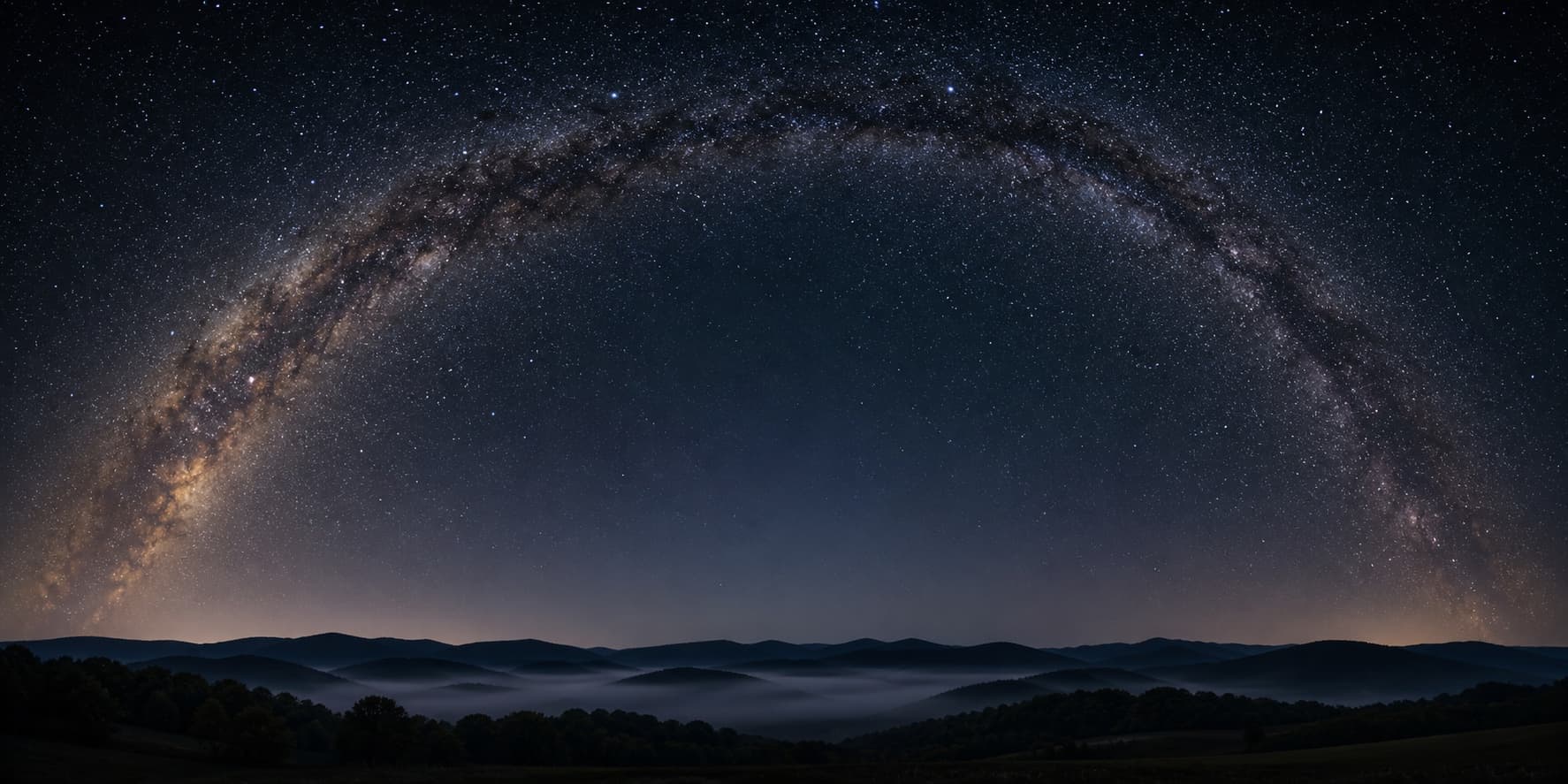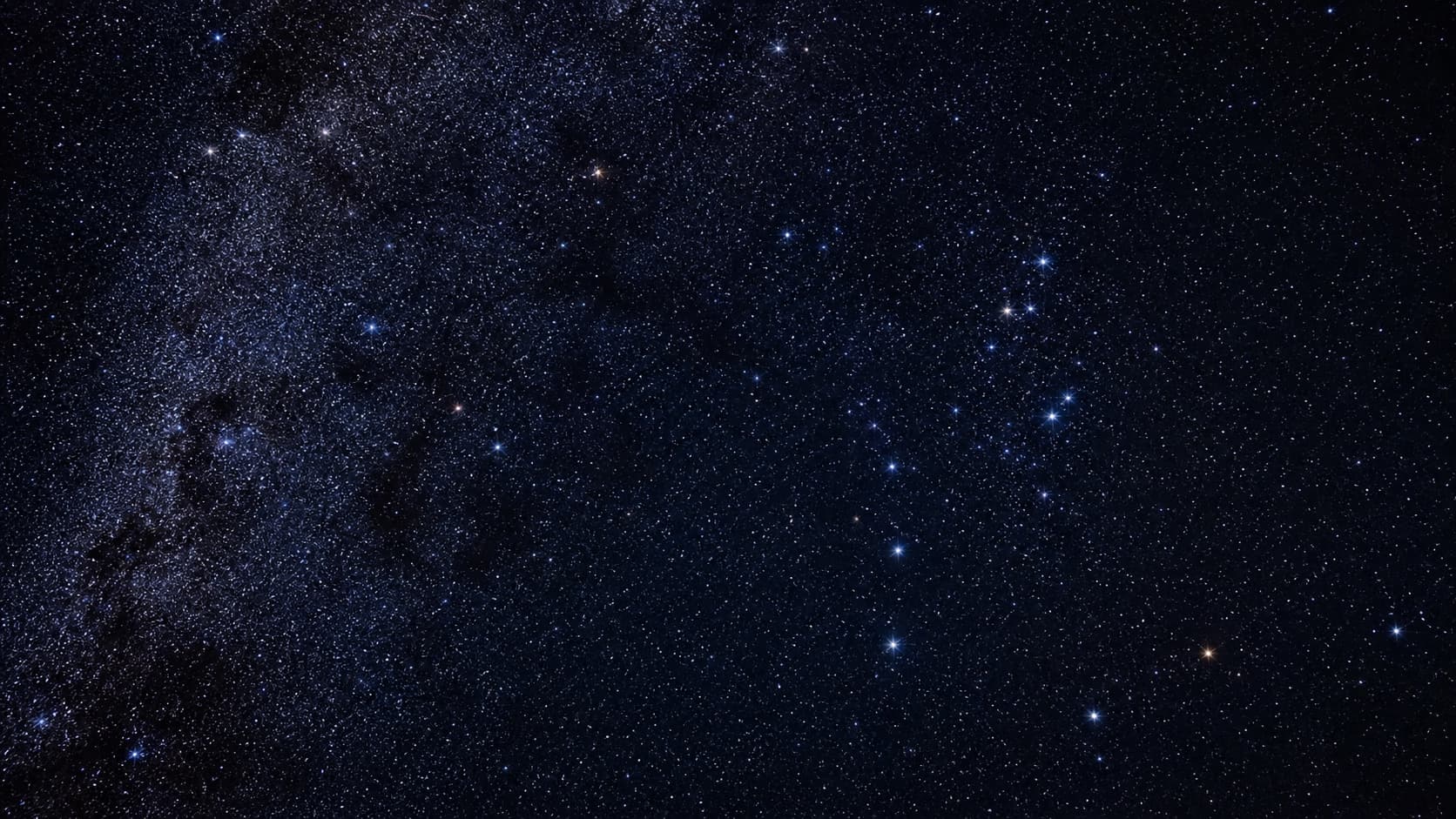
Astrology and astronomy share a name, a 5,000-year-old history, and a sky. They’re also two very different things.
Astronomy is a natural science: the study of stars, planets, galaxies, and the laws that govern them. Astrology is a system of meaning-making: the idea that the positions of celestial bodies influence human lives.
Both are real practices with long traditions. This post is the neutral version of the explainer, written without sneering at either one — just clear about what each actually is.
Where they came from (the same place)
For most of human history, astronomy and astrology weren’t separate. Babylonian priest-astronomers in 1000 BC tracked the planets with extraordinary precision — and the reason they tracked them was to predict the fates of kings.
Ptolemy, the second-century astronomer whose star catalogue defined the field for over a thousand years, also wrote the founding text of Western astrology (the Tetrabiblos). To him, they were two halves of one practice — observe the sky, interpret what it meant.
Tycho Brahe, the great pre-telescope observer of the 1500s, kept astrology records as part of his job. Even Kepler — the one who worked out the laws of planetary motion — cast horoscopes professionally to make a living.
Where they split (the 1600s)
Three things happened that pulled them apart. The telescope arrived in 1609, and Galileo started seeing things (moons of Jupiter, phases of Venus) that the old astrological cosmology couldn’t accommodate.
Then Newton, in 1687, wrote down the laws of gravity and motion that explained why planets move the way they do — without needing any concept of celestial influence on human affairs. The math worked perfectly without it.
Finally, scientific method as we now know it crystallized in the same century — the principle that claims should be testable by experiment.
Astronomy embraced that. Astrology didn’t, because the kind of influence it describes isn’t the kind science can test.
By the 1700s the split was complete.
Astronomy was the science. Astrology became the interpretive tradition it is today.
What each one actually does
Astronomy, in one paragraph
Astronomy measures and explains things in the sky. How far away that galaxy is.
What that star is made of. How a black hole bends light.
When the next eclipse falls and where it will be visible. It uses telescopes, spectroscopes, math, and physical theory.
Astrology, in one paragraph
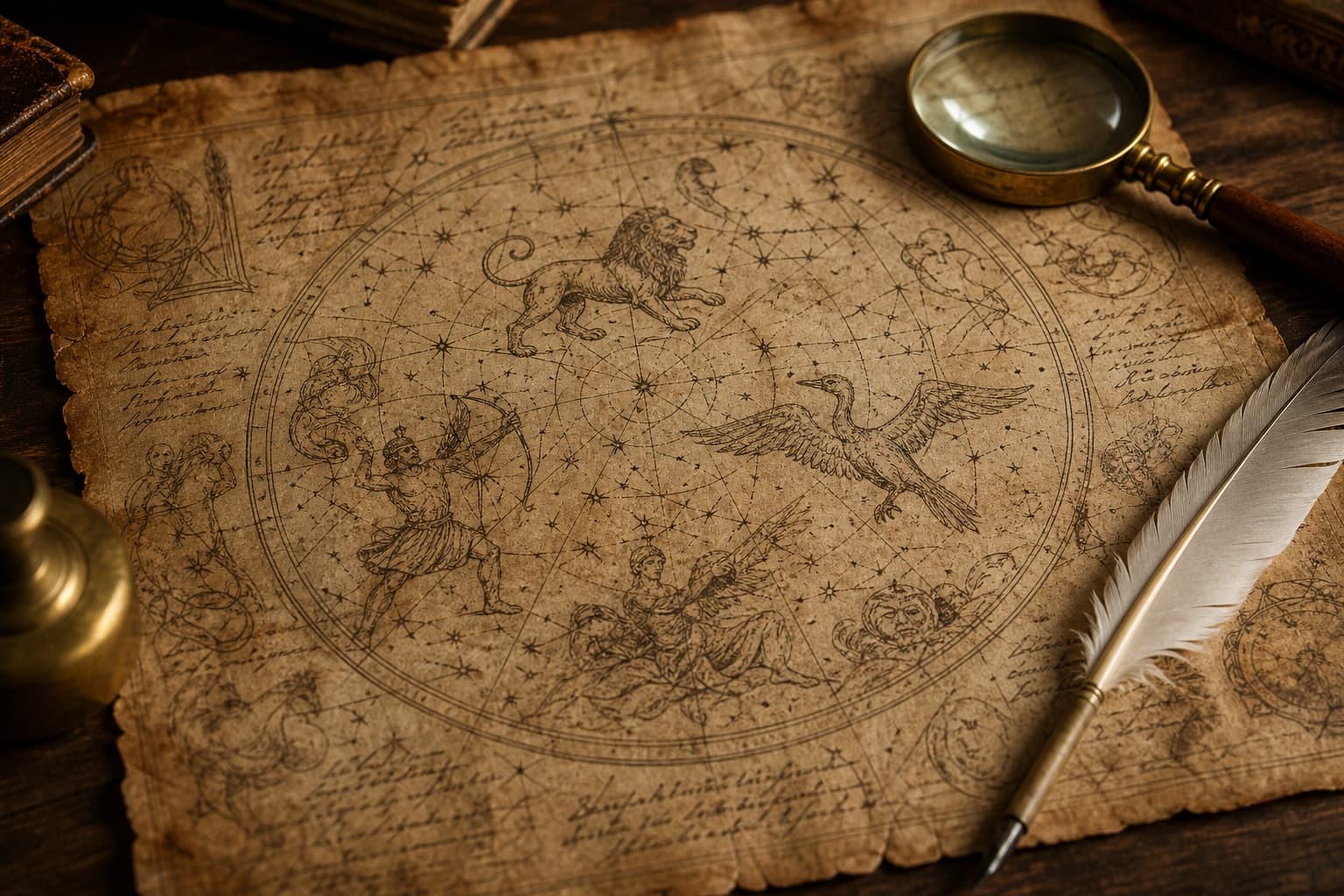
Astrology interprets the positions of the sun, moon, and planets relative to the 12 zodiac signs (and the 12 houses of the natal chart) to make statements about personality, relationships, and timing. It uses the same celestial geometry as astronomy as raw input, but applies a meaning-making framework on top.
Things astrology gets right that astronomy doesn’t
People sometimes ask whether astrology “works.” The fair answer is that astrology is not trying to do what astronomy does, so judging it by astronomy’s rules misses the point.
What astrology does well: it gives people a vocabulary for reflection.
Sun signs, rising signs, retrogrades — these are shared symbols that millions of people use to talk about themselves, their relationships, their inner lives. That’s a real cultural function, regardless of what the sun and Mercury are technically doing.
Things astronomy gets right that astrology doesn’t
Astronomy can predict, to the second, when the next solar eclipse will happen, where on Earth it will be visible, and how long it will last.
It can tell you what that star you’re looking at is actually made of from 600 light years away. It built every satellite, every GPS signal, every Mars rover.
The predictive power on the physical side is overwhelming and unambiguous. That’s the strength of a testable, math-grounded science.
Which one is a star map?
A SkyWhen star map is the literal sky, rendered from astronomical data. Given a date, a time, and a place, we calculate exactly which stars and planets were overhead at that moment — using the same data and math that professional planetariums use.
That’s astronomy.
There’s no horoscope reading, no compatibility chart, no personality interpretation in the print. Just the actual sky as it actually looked.
A natal birth chart from an astrologer is a different artifact — it uses the same celestial positions but maps them onto the 12 zodiac signs and 12 astrological houses, then interprets the result. Different framework, different output.
We cover that distinction in detail in Birth Chart vs. Birth Star Map .
Why people mix them up
The vocabulary overlaps. Constellations, signs, planets, “the sky on the day you were born” — all of these phrases get used in both worlds, and they don’t always mean the same thing.
The zodiac constellations (Aries, Taurus, Gemini, etc.) are real patterns of stars studied by astronomy. The zodiac signs (Aries, Taurus, Gemini, etc.) are 12 equal slices of the ecliptic used by astrology — named after the constellations but no longer aligned with them, which is its own fascinating story.
See Why Your Star Sign Doesn’t Match the Sun’s Actual Position Anymore .
The bridge: a star map is the sky itself, no interpretation
If you want the sky from a meaningful date — a birthday, an anniversary, the night someone was born — a star map renders exactly that. The actual stars, in their actual positions, with no horoscope reading attached.
Plug a date and place into the SkyWhen customizer and the preview will show the real sky from that moment. The preview is free.
For the astronomy-vocabulary tour, see The 12 Zodiac Constellations. For accuracy details, see Are Star Maps Accurate?
FAQ
Is astrology a science?
No, in the modern sense of “science” — it doesn’t follow the experimental method and its claims aren’t falsifiable. It is a long-established interpretive tradition with cultural and personal value to many people, but it sits outside science.
Is astronomy a kind of astrology?
No — it’s the other way around historically. The two were one practice for most of history, then astronomy split off in the 1600s as physics and the telescope arrived. Astronomy is the natural science that stayed.
Do astronomers believe in astrology?
Most professional astronomers don’t accept the predictive claims of astrology, because there’s no measurable physical mechanism by which planetary positions could influence personality. Many still enjoy it culturally.
Are zodiac signs astronomy or astrology?
The zodiac signs are an astrological system. The zodiac constellations they’re named after are astronomy — real patterns of stars in the sky. The two used to line up; precession has pulled them about a month apart over the last 2,000 years.
Is a star map astrology or astronomy?
Astronomy. A star map renders the actual stars and planets that were in the sky at a chosen moment — no horoscope reading or personality interpretation is part of the print. A natal birth chart, in contrast, is an astrological artifact.