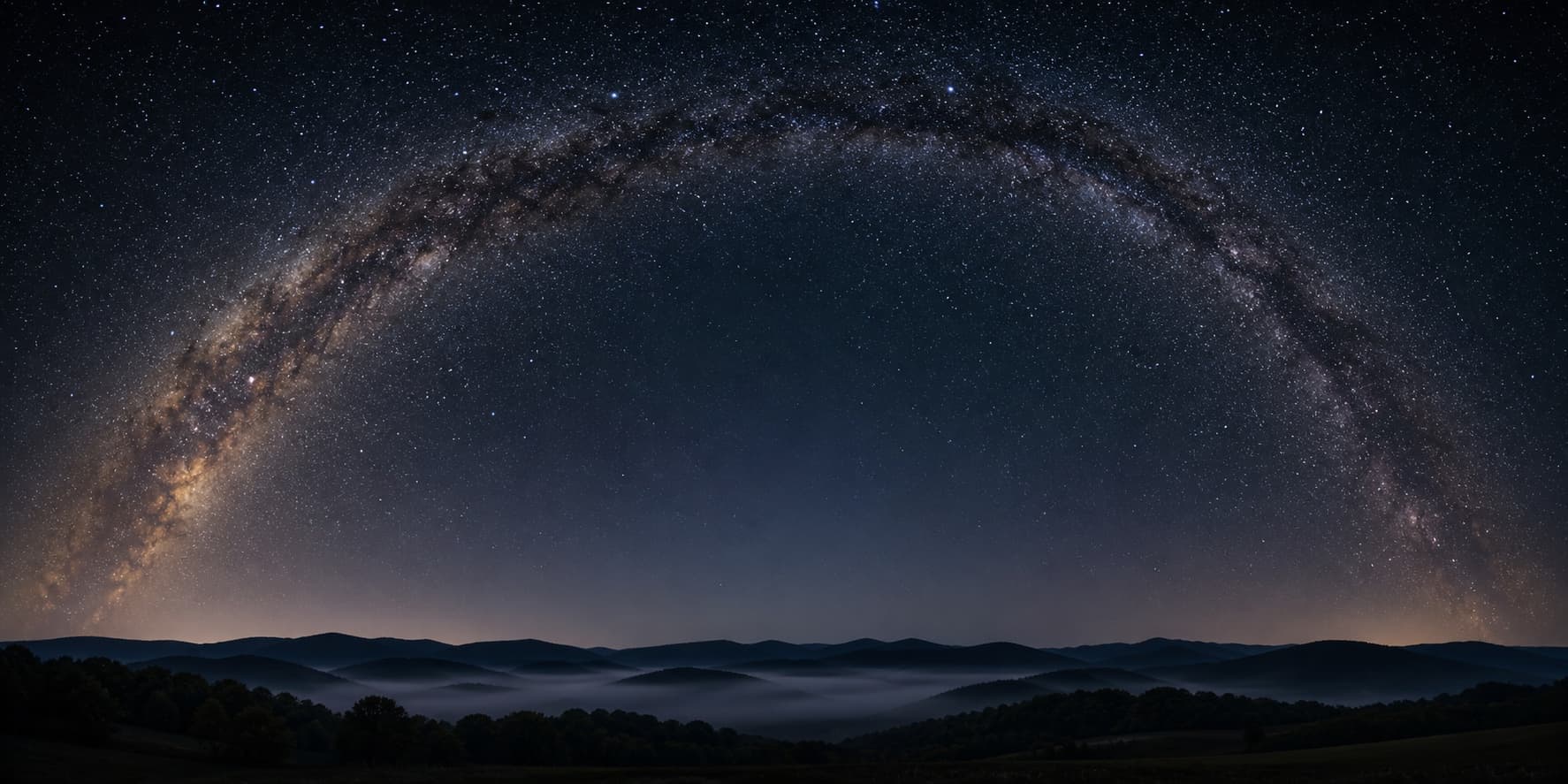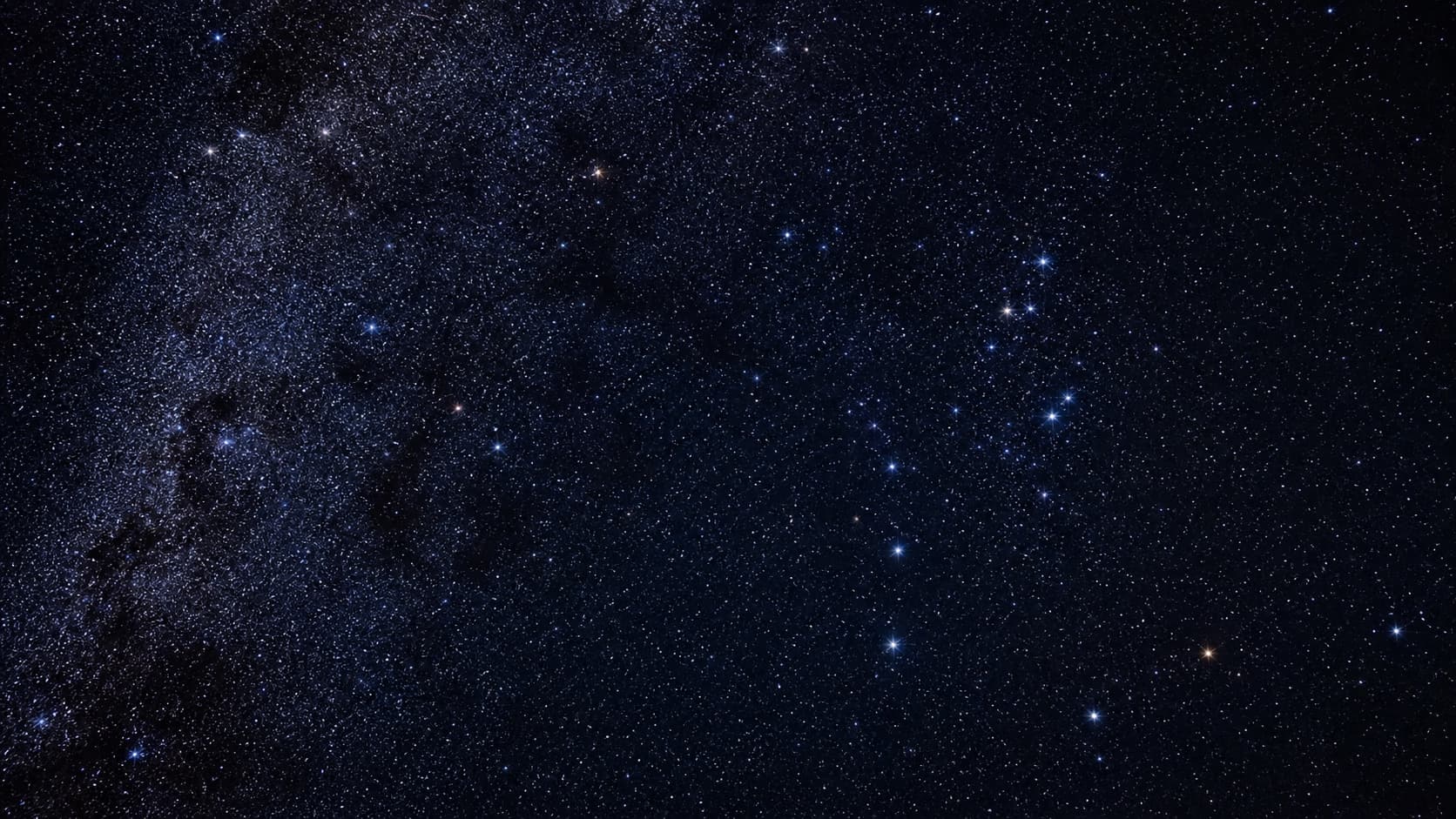
Your zodiac sign has a constellation behind it. It’s a real pattern of stars in the night sky, visible at certain times of year from certain latitudes — and finding it doesn’t require equipment, an app, or anything more than a clear night.
The catch: most zodiac signs are best viewed during the half of the year opposite to the sign’s dates.
If you’re a Leo, Leo is overhead in late winter and spring, not in July. Here’s the practical visibility window for each sign, and how to actually spot it.
The visibility table at a glance
Best evening viewing months from mid-Northern latitudes (New York, London, Tokyo).
Reverse seasons for Southern Hemisphere (Sydney, Cape Town, Buenos Aires). Each constellation is visible for longer than the listed window — these are just the months when it’s highest at a reasonable evening hour.
- Aries: October – January
- Taurus: November – February
- Gemini: December – March
- Cancer: February – April
- Leo: March – May
- Virgo: April – June
- Libra: May – July
- Scorpius: June – August (Northern Hemisphere; better from south)
- Sagittarius: July – September
- Capricornus: August – October
- Aquarius: September – November
- Pisces: October – December
If your sign is Aries (Mar 21 – Apr 19)
Look October through January in the evening, high in the southeastern to southern sky from the Northern Hemisphere.
Pointer: find the Pleiades (the famous tight cluster of stars in Taurus). Aries is the small triangle of three modest stars to the west (right) of the Pleiades.
Difficulty: medium. Aries is faint and small — you need a clear night and no city-center light pollution to see all three of its main stars.
If your sign is Taurus (Apr 20 – May 20)
Look November through February in the evening, high in the southern sky from the Northern Hemisphere.
Pointer: find Orion’s Belt.
Follow the line of the belt up and to the right; it points directly at the orange star Aldebaran, the eye of the bull. The V-shape of the bull’s face is right there.
Difficulty: easy. Taurus is one of the brightest and most recognizable constellations.
If your sign is Gemini (May 21 – Jun 20)
Look December through March, high in the eastern-to-southern sky from the Northern Hemisphere.
Pointer: find Orion, then look up and to the east (left). The two bright stars Castor and Pollux are obvious — close together, similar brightness, two heads of the twins.
Difficulty: easy.
If your sign is Cancer (Jun 21 – Jul 22)
Look February through April, high in the eastern-to-southern sky from the Northern Hemisphere.
Pointer: find Gemini (the twins) and Leo (the backward question-mark).
Cancer is the faint patch between them. On a dark night, look for the Beehive Cluster — a fuzzy patch right in the middle of the constellation, just barely visible to the naked eye.
Difficulty: hard from any light-polluted area. Cancer is the faintest zodiac constellation.

If your sign is Leo (Jul 23 – Aug 22)
Look March through May, high in the southern sky from the Northern Hemisphere.
Pointer: find the Big Dipper, then follow the front of the bowl downward (away from the handle).
It points to a backward question-mark of bright stars — that’s the Sickle, the front of the lion. Regulus, the bright blue-white star at the base, is the lion’s heart.
Difficulty: easy.
If your sign is Virgo (Aug 23 – Sep 22)
Look April through June, in the southern sky from the Northern Hemisphere.
Pointer: there’s a saying “arc to Arcturus, speed on to Spica.” Follow the curve of the Big Dipper’s handle outward; it leads first to Arcturus (a bright orange star), then continues to Spica (a bright blue-white star).
Spica is the brightest star in Virgo.
Difficulty: medium. Spica is easy to find, but the rest of Virgo’s shape is sprawling and faint.
If your sign is Libra (Sep 23 – Oct 22)
Look May through July, low in the southern sky from the Northern Hemisphere.
Pointer: Libra is between Virgo (with Spica) and Scorpius (with red Antares). A rough quadrilateral with no especially bright stars.
Difficulty: hard from city skies. Libra is one of the faint ones.
If your sign is Scorpius (Oct 23 – Nov 21)
Look June through August, low in the southern sky from the Northern Hemisphere. Much higher and easier from the Southern Hemisphere.
Pointer: look for a long, distinctive J-curve of bright stars.
Antares, a red-orange supergiant, marks the scorpion’s heart. The curve of the body and tail genuinely looks like a scorpion.
Difficulty: easy if you have a clear southern horizon.
If your sign is Sagittarius (Nov 22 – Dec 21)
Look July through September, low in the southern sky from the Northern Hemisphere.
Pointer: look for “the teapot” — eight bright stars that genuinely look like a kettle, complete with handle and spout. The Milky Way rises out of the teapot’s spout like steam — that’s the center of our galaxy.
Difficulty: easy if you have a clear southern horizon.
If your sign is Capricornus (Dec 22 – Jan 19)
Look August through October, low in the southern sky from the Northern Hemisphere.
Pointer: Capricornus is east of Sagittarius. A wide bowtie shape of medium-bright stars.
Difficulty: medium.
If your sign is Aquarius (Jan 20 – Feb 18)
Look September through November, in the southern sky from the Northern Hemisphere.
Pointer: large and spread out, with a small Y-shape called the “water jar” at the head — that’s usually the only clearly identifiable piece.
Difficulty: hard. Aquarius is faint and amorphous.
If your sign is Pisces (Feb 19 – Mar 20)
Look October through December, in the southern sky from the Northern Hemisphere.
Pointer: Pisces sits below the Square of Pegasus. Two long lines of faint stars connected by a faint loop at the western end — the two fish tied by their tails.
Difficulty: hard. Very faint.
Why your sign is opposite to its visibility
When the sun is “in” your sign (the months astrology assigns to it), the constellation is in the daytime sky — behind the sun — so you can’t see it. Six months later, the Earth has moved halfway around the sun, and now your sign’s constellation is overhead at midnight.
That’s why a Leo in July is looking at Capricornus and Sagittarius overhead, not Leo. To see Leo, the Leo born in July has to wait until spring.
The bridge: your sign as it actually looked, on your birthday
A star map of your birthday won’t show your sign’s constellation (it’s behind the sun that day), but it will show the actual sky overhead at the moment you were born — the constellations that were visible from your birthplace at that exact time.
Plug your birth date and place into the SkyWhen customizer and the preview will show it. The preview is free.
For the 12-constellation tour, see The 12 Zodiac Constellations. For why the sun’s position has drifted, see Why Your Star Sign Doesn’t Match the Sun’s Actual Position Anymore.
FAQ
Can I see my zodiac sign on my birthday?
Not at night, no. The sun is in front of your sign’s constellation during your birthday season, which makes it a daytime constellation invisible behind the sun. You’ll need to wait until roughly six months later to see it overhead at night.
What's the brightest star in my zodiac constellation?
Brightest stars by sign: Aries — Hamal, Taurus — Aldebaran, Gemini — Pollux, Cancer — Tarf, Leo — Regulus, Virgo — Spica, Libra — Zubeneschamali, Scorpius — Antares, Sagittarius — Kaus Australis, Capricornus — Deneb Algedi, Aquarius — Sadalsuud, Pisces — Eta Piscium.
Can I see zodiac constellations from the Southern Hemisphere?
Yes — all 12, since the zodiac runs roughly along the ecliptic near the equator. But the seasons are flipped, and the southern constellations (especially Scorpius and Sagittarius) appear much higher in southern skies than northern ones.
Do I need a telescope to see zodiac constellations?
No. All 12 are made up of stars visible to the naked eye. The bright ones (Leo, Scorpius, Taurus, Gemini) are easy from city skies; the faint ones (Cancer, Pisces, Libra, Aquarius) need a dark country sky.
How do I tell which constellation is which?
Use a known bright constellation as a pointer (Orion’s belt points to Taurus; the Big Dipper’s handle leads to Spica in Virgo). A free phone app like Stellarium Mobile or Sky Tonight will overlay constellation names on whatever you point your camera at.