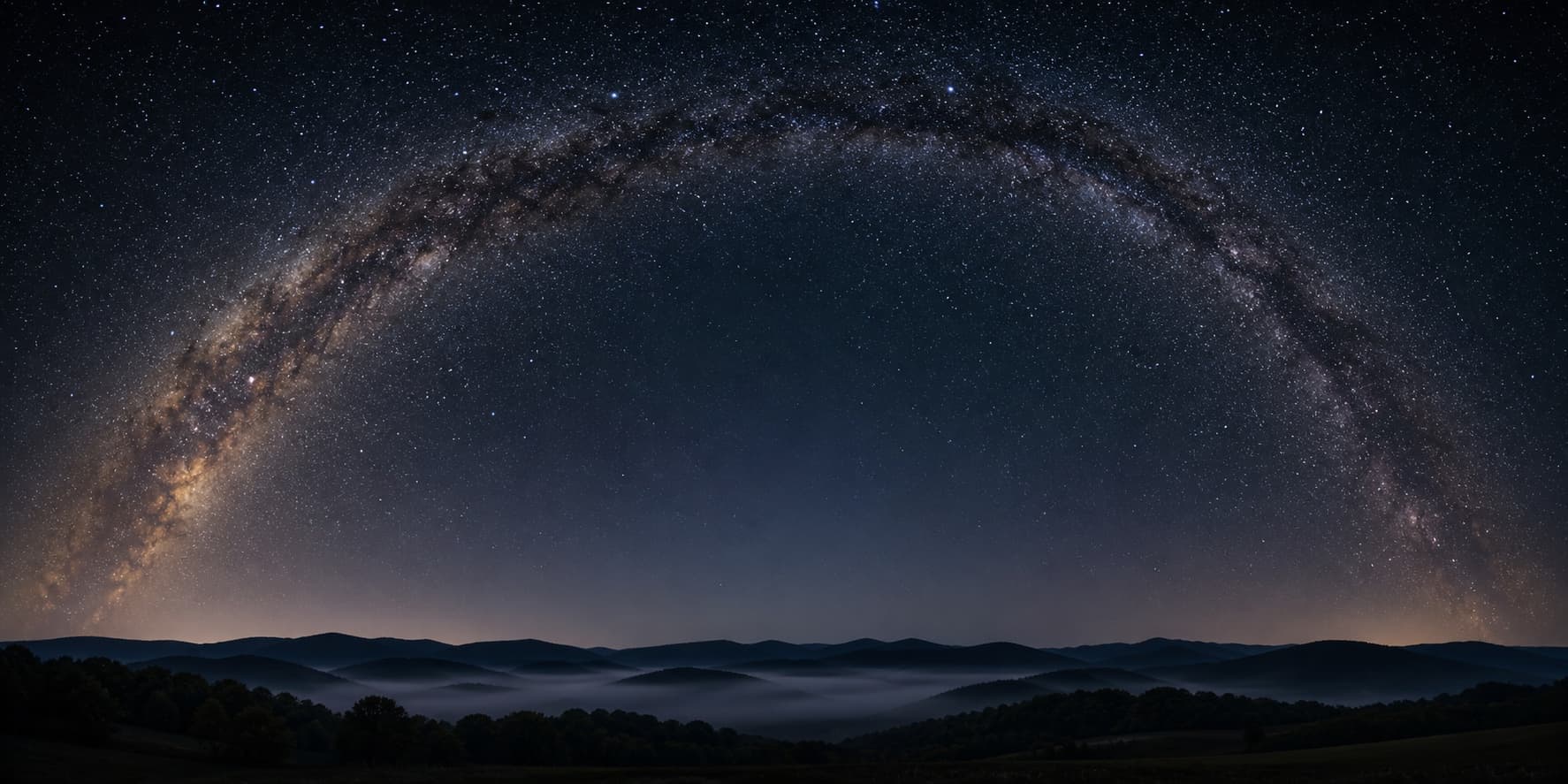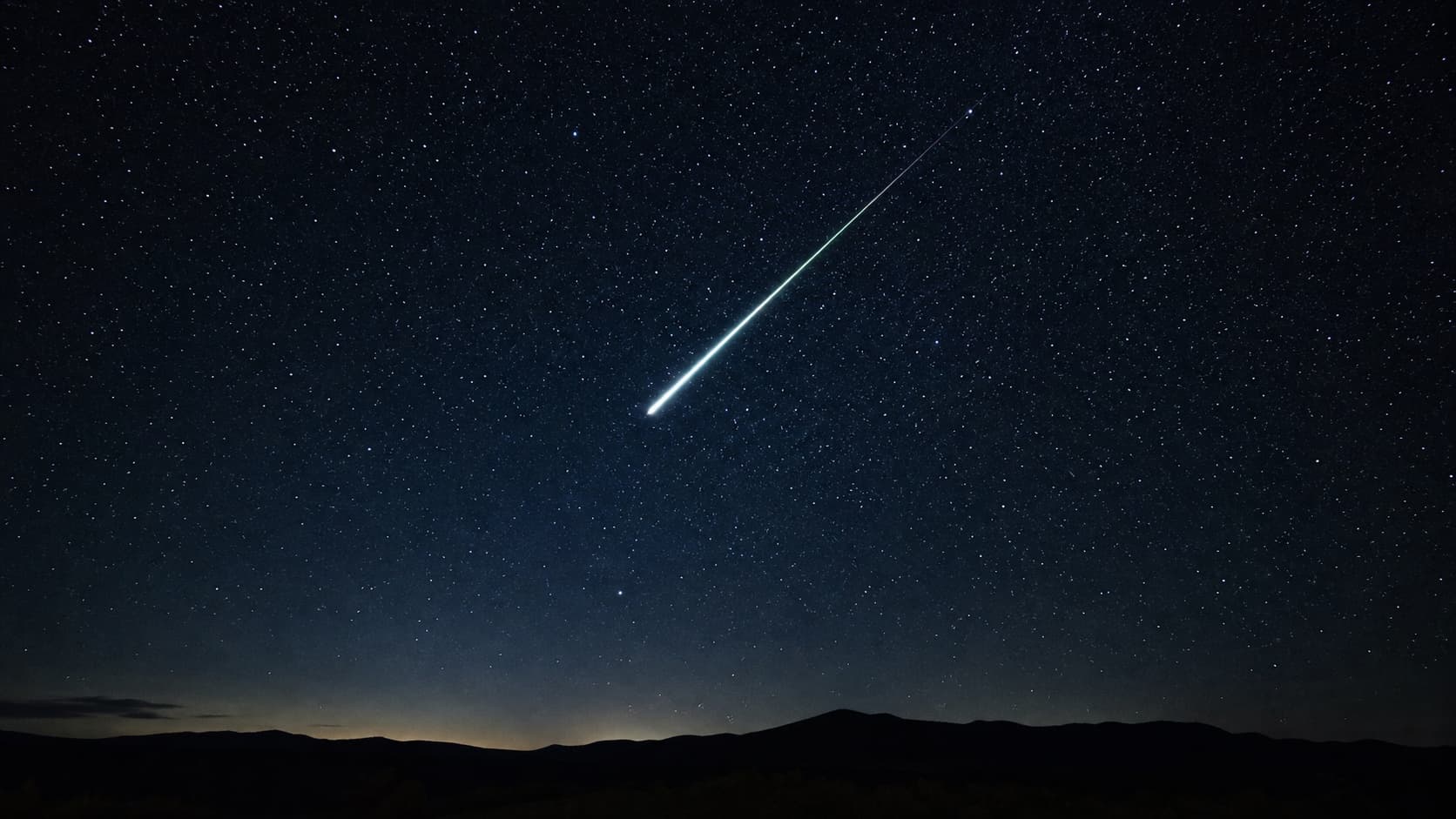
There are about a dozen meteor showers a year.
Maybe six are worth setting an alarm for, and two are genuinely special. This is the breakdown — one shower at a time — of what each annual event actually looks like, and whether it’s worth your night.
If you want the general “what is a meteor shower” explainer first, read Meteor Showers Explained and come back here for the specifics.
The live tool above shows what’s overhead from your location right now — handy for confirming the shower’s radiant is above the horizon before you go out. Standalone page at skywhen.com/tools/sky-tonight.
Quadrantids — January 3
The new year’s opener.
Sharp peak (~100/hour) in a six-hour window, which means timing matters more than for most showers. Miss the peak by twelve hours and you’ll see almost nothing.
Northern Hemisphere only — the radiant sits in a now-defunct constellation called Quadrans Muralis, near the handle of the Big Dipper. The dust comes from an asteroid called 2003 EH1, which is most likely a fragment of an extinct comet.
Cold and short, but rewarding for the well-timed observer.
Lyrids — April 22
Modest but reliable.
Around 15–20 per hour at peak, with the occasional burst year that delivers double or triple that. The parent comet is C/1861 G1 Thatcher, which takes 415 years to orbit the sun.
One of the oldest recorded showers — Chinese astronomers wrote about it in 687 BC. Best viewed after midnight, looking northeast.
Lyrids occasionally produce fireballs (very bright meteors), and the streaks tend to leave persistent glowing trails.
- JAN3★QuadrantidsMeteor shower
Sharp, short peak (~120/hour) in a six-hour window. Northern Hemisphere, pre-dawn.
- JAN3●Wolf supermoonSupermoon
First of four supermoons in 2026, 362,300 km from Earth. Same night as the Quadrantids — but the bright moon will wash out the shower.
- FEB17◐Annular solar eclipseSolar eclipse
“Ring of fire” eclipse. Path crosses Antarctica and the tip of South America; partial phases visible across the Southern Hemisphere.
Annularity from Antarctica / southern South America
- MAR3○Total lunar eclipseLunar eclipse
Blood moon — the moon passes through Earth's shadow and turns coppery red. Visible across the Pacific, Asia, Australia, and western North America.
Best from the Pacific, Asia, Australia, western North America
- MAR8◇Venus and SaturnConjunction
Bright Venus and pale Saturn less than a degree apart, low in the western evening twilight. Catch them soon after sunset before they set.
- MAR20—March equinoxEquinox
Day and night equal across the globe. Spring begins in the Northern Hemisphere, autumn in the Southern.
Set a location above to see which events are above your horizon at peak.
That’s the live 2026 calendar — each shower’s date with an Above horizon / Below horizon flag for your location. Full filterable year at skywhen.com/tools/2026-sky-calendar.
Eta Aquariids — May 5–6
Halley’s Comet debris, part one. Earth crosses the Halley trail twice a year — once in May (Eta Aquariids) and once in October (Orionids).
Strongly favors the Southern Hemisphere and tropical latitudes.
From Sydney or Cape Town, expect 40–60 per hour at peak. From London or Boston, more like 5–10.
Fast meteors (66 km/s — among the fastest of the year) with long graceful streaks. Visible in the pre-dawn hours, looking east.
Perseids — August 12–13
The shower most people think of when they think of meteor showers.
Comet 109P/Swift-Tuttle. Peak rates of 60–100 per hour from a dark sky.
What makes the Perseids special isn’t the rate — the Geminids are denser — it’s the weather and the hours. August nights in the Northern Hemisphere are warm enough to lie on the grass without a sleeping bag, and the shower’s active hours line up with comfortable late-evening viewing.
The radiant rises in the northeast around 11 p.m.
Best viewing is between 2 a.m. and dawn, but you’ll see plenty starting at midnight. Look about 40 degrees away from Perseus, not directly at it.
2026 outlook
The 2026 peak falls on the night of August 12–13. A waning crescent moon means dark skies — an excellent year for the Perseids.
Delta Aquariids — late July
Often overlooked because they overlap with early Perseid activity.
Around 20 per hour at peak, with a broad plateau rather than a sharp spike. Favors the Southern Hemisphere and southern Northern Hemisphere.
If you’re south of about 40°N latitude, the Delta Aquariids and early Perseids together can make for a strong week of meteor watching in late July and early August.
Orionids — October 21–22
Halley’s Comet debris, part two.
Around 20 per hour at peak. The radiant is near Orion’s raised club, just north of Betelgeuse.
Fast meteors with long persistent trails. The pre-dawn sky is best — Orion rises around midnight and is well-placed by 2 a.m.
Not as dense as the Perseids or Geminids, but a worthwhile shower for two reasons: the meteors are striking individually, and Orion itself is one of the most recognizable parts of the sky.
Leonids — November 17–18
The Leonids are normally a modest shower (~15 per hour). What makes them famous is that every 33 years, give or take, Earth passes through an especially dense ribbon of comet debris and the rates briefly hit thousands per hour — a meteor storm.
The most recent storm year was 1999. The next anticipated one is around 2033. 2026 is firmly in the quiet part of the cycle.
Parent comet: 55P/Tempel-Tuttle, which orbits the sun every 33 years. The cycle of quiet and storm years tracks the comet’s passage through the inner solar system.
Geminids — December 13–14
The strongest annual shower.
Up to 120 meteors per hour at peak from a dark site. Unusually colorful for a meteor shower — Geminid meteors often show yellows, greens, blues, and occasionally reds.
Two things make the Geminids unusual.
First, the parent body isn’t a comet — it’s an asteroid called 3200 Phaethon. (Possibly an extinct comet nucleus, but it currently behaves as a rocky asteroid.) Second, the meteors are slower than average, which makes them easier to see and more visually impressive.
The downside is December. Northern Hemisphere viewing in mid-December means cold — often very cold.
A sleeping bag and a thermos are non-negotiable. Southern Hemisphere observers have it easier on temperature but get a lower rate because the radiant climbs less high in the sky.
2026 outlook
The 2026 Geminid peak falls on the night of December 13–14.
Moon conditions are workable but not ideal — there will be some moonlight to contend with. Still, if you can get out to a dark site, expect 60–80 meteors per hour in the second half of the night.
Ursids — December 22
The final shower of the year.
Modest (~10/hour) and easy to miss right after the Geminids steal everyone’s attention. Northern Hemisphere only.
Parent comet: 8P/Tuttle. Worth a glance on a clear night if you’re already outside for the winter solstice.
Set a location and this becomes a list of the actual dark nights near you — how many hours each one gives you, and between which times. The new moon is only the middle of the window.
New moons come round every 29 or 30 days.
The honest ranking
If you only watch one shower a year, watch the Geminids. They’re the densest, brightest, and most colorful.
If you only watch one shower a year and refuse to be cold, watch the Perseids. They’re second-best in rate but first-best in atmosphere — warm nights, friendly hours, easy travel.
Everything else is a bonus. The Quadrantids reward people who like a short sharp peak.
The Lyrids are good for fireball-chasers. The Aquariids are excellent if you live in the Southern Hemisphere.
The Orionids are quietly beautiful. The Leonids are a long bet — set a calendar reminder for 2033.
The bridge: a meteor shower is a date
The thing meteor showers do that we keep coming back to is anchor a memory to a specific night. Where you were, who you were with, what the sky looked like.
That night’s sky is something you can put on a wall. The custom star map renders the actual stars, planets, and moon phase from that exact date and place — with the constellation the meteors came from sitting where it actually sat.
Plug a meteor-night date you remember into the SkyWhen customizer and the preview will show you what the sky looked like.
If you want the year at a glance, see The 2026 Sky Calendar. If you want the science behind the math we use to render any past night, see Are Star Maps Accurate?
FAQ
Which meteor shower is the best of the year?
The Geminids in December — highest rate (~120/hour), bright slow meteors, unusually colorful. The catch is the cold weather; bring a sleeping bag.
For comfort, the Perseids in August are a close second — slightly lower rate but much warmer nights and easier viewing hours.
When are the next Perseids?
The Perseids peak every year around August 12–13. Activity ramps up from late July and tapers off in the last week of August.
The 2026 peak is favored by a waning crescent moon — dark skies, strong show.
Is the Leonid meteor storm coming back?
The 33-year cycle suggests the next storm year will be around 2033. Until then, expect quiet years with rates of 10–15 per hour at peak.
Do meteor showers happen at the same time every year?
Yes — within a day or two. Earth crosses the same comet-debris trails on roughly the same calendar dates each year because both our orbit and the trail are stable.
Can I see meteor showers from a city?
You’ll see the brightest fireballs but miss most of the show. Even from a small city, light pollution cuts visible rates by 80–90%.
For a meaningful viewing, drive an hour or more away from city lights, or find a designated dark-sky park.