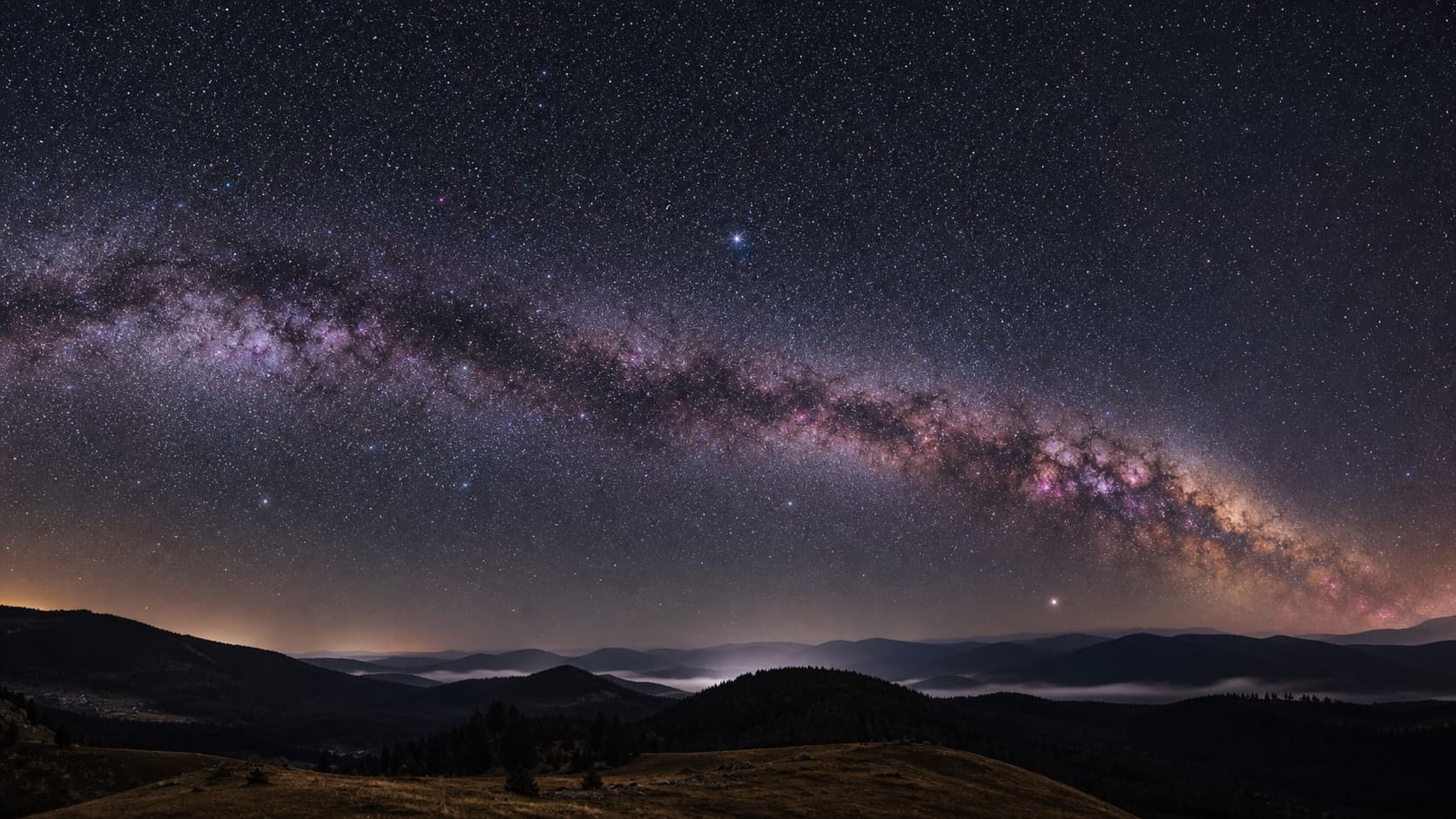
About 60 percent of North Americans can’t see the Milky Way from their homes.
Light pollution has erased the stars from most of the inhabited world. Dark sky parks are the reverse — protected zones, certified by DarkSky International, where the sky is still close to what humans saw for the first 195,000 years of our species’ existence.
This is a tour of some of the best-protected ones globally, with practical travel notes — when to go, what you’ll see, and how to plan a trip that works.
What “dark sky park” actually means
DarkSky International (formerly the International Dark-Sky Association) is a nonprofit that certifies places where light pollution is genuinely minimal and where the local government, park service, or landowner has committed to keeping it that way.
There are several certification tiers: International Dark Sky Park (state parks, national parks), International Dark Sky Reserve (larger regions), International Dark Sky Community (whole towns committed to dark-sky-friendly lighting), and International Dark Sky Sanctuary (the rarest tier, for essentially the darkest locations on Earth).
Certification requires a minimum measured sky brightness — usually Bortle Class 1 or 2 (more on the Bortle scale below) — plus sustainable lighting management policies.
The Bortle Dark Sky Scale (for context)
Astronomer John Bortle’s 9-step scale for measuring sky darkness:
- Class 1: Excellent dark sky — zodiacal light visible, Milky Way casts shadows, you can read by the light of M31
- Class 2: Typical truly dark site — Milky Way highly structured
- Class 3: Rural sky — Milky Way visible, faint detail
- Class 4: Rural/suburban transition — Milky Way visible but pale
- Class 5: Suburban sky — Milky Way faint, hard to see
- Class 6–7: Bright suburban / urban transition
- Class 8–9: City — only the brightest stars visible
Most of the inhabited Western world is Class 5 or worse. Dark sky parks are usually Class 1 or 2 — an experience most people have never had.
North America: the most-visited picks
Mauna Kea, Hawaii
13,800 feet above the Pacific Ocean. Bortle 1.
The summit is home to a dozen of the world’s most important telescopes.
The visitor station at 9,200 feet is open after dark for public stargazing. Calm, dry air; almost no light pollution within hundreds of miles.
Best months: anytime, but late spring through early fall has the most comfortable weather. Acclimatize at lower elevation first — altitude sickness is real.
Big Bend National Park, Texas
One of the least-light-polluted spots in the lower 48 U.S. states. Vast, empty desert sky from horizon to horizon.
International Dark Sky Park since 2012. Easy to access by car, with multiple campgrounds and lodges inside the park.
Best months: October through April. Summer is too hot for comfortable overnight stargazing.
Death Valley National Park, California
International Dark Sky Park, designated 2013.
Dry, low-humidity air and vast distances from any city. Furnace Creek and the Mesquite Flat dunes are popular stargazing spots.
Best months: November through March (extreme summer heat).
Bryce Canyon National Park, Utah
High-altitude desert sky, with the canyon’s hoodoos as a foreground silhouette.
Regular astronomy ranger programs in summer. Bortle 2 or sometimes 1.
Best months: April through October.
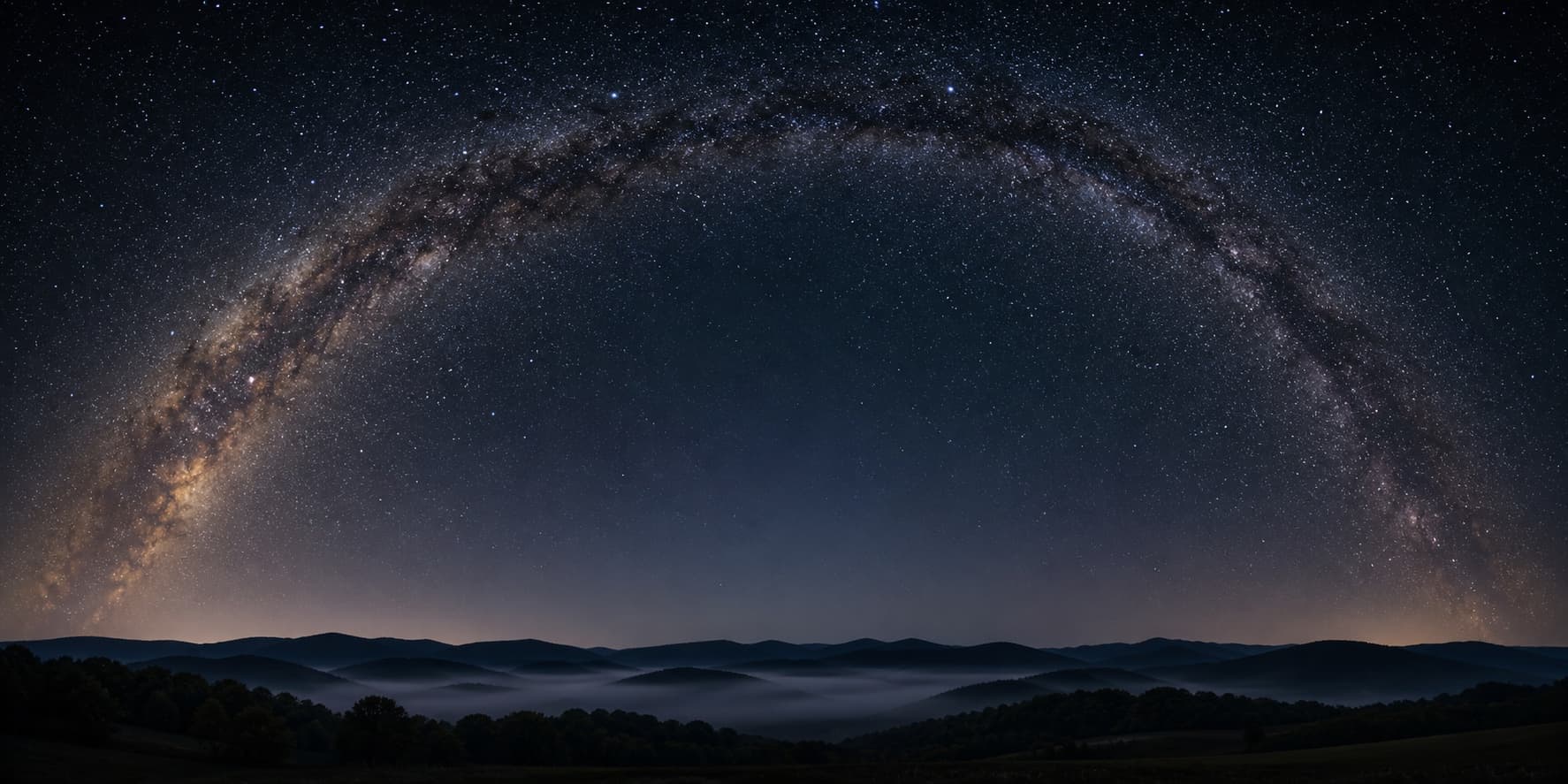
Other strong North American picks
- Cherry Springs State Park, Pennsylvania — the East Coast’s best dark sky park.
- Headlands International Dark Sky Park, Michigan — lakefront stargazing.
- Capulin Volcano, New Mexico — high-elevation, vast horizons.
- Natural Bridges National Monument, Utah — first U.S. designated Dark Sky Park.
- Jasper National Park, Alberta — Canada’s largest Dark Sky Reserve.
- Mont-Mégantic, Quebec — the world’s first Dark Sky Reserve.
Global picks worth the flight
Aoraki Mackenzie International Dark Sky Reserve, New Zealand
One of only a handful of certified Dark Sky Reserves in the world (a tier above Dark Sky Park).
The Mackenzie Basin includes Lake Tekapo, where the Church of the Good Shepherd has become one of the most-photographed dark-sky sites globally. Mt John Observatory runs tourist stargazing sessions.
Best months: any clear night; New Zealand winters (June through August) have the longest nights but the coldest weather.
NamibRand Nature Reserve, Namibia
Africa’s first International Dark Sky Reserve.
Bortle 1 to a level that’s rare anywhere on Earth. Combines stargazing with red-dune landscapes and southern-hemisphere skies — the Milky Way overhead in June and July is exceptional from this latitude.
La Palma, Canary Islands
Spanish island in the Atlantic that hosts some of Europe’s best telescopes (Roque de los Muchachos Observatory). Year-round clear nights, mild weather, and decent infrastructure for tourist stargazing.
Pic du Midi, France
Mountain-top observatory in the French Pyrenees, accessible by cable car, with overnight stays available in the observatory itself.
Combines comfortable European travel with exceptional sky access. Often described as Europe’s best stargazing site reachable without a 4×4.
Wadi Rum, Jordan
Desert valley in southern Jordan with vast empty horizons, almost zero light pollution, and a network of Bedouin-run camps where the standard tourist offering is a night sleeping outdoors under the sky.
Planning a dark-sky trip
Time the moon
The single biggest factor after weather.
Plan to arrive at the park during the new-moon period (roughly seven days before to seven days after a new moon). A full moon brightens the sky to the point of washing out the Milky Way even in Bortle 1 darkness.
The full moon calendar lists every full moon this year with the moonrise time where you are. Those are the nights to avoid; the new moon falls roughly two weeks either side of each one, and that is your window.
Check seasonal Milky Way visibility
The bright central part of the Milky Way (toward the galactic center) is up in the evening from March through October from the Northern Hemisphere, and year-round from the Southern. For Northern Hemisphere trips, May through September is the prime window.
See How to See the Milky Way .
Set a location and this becomes a list of the actual dark nights near you — how many hours each one gives you, and between which times. The new moon is only the middle of the window.
New moons come round every 29 or 30 days.
Time it with an event, if you can
A dark sky is worth the trip on its own, but landing on a meteor shower peak makes it a different night entirely — Bortle 1 skies are where the hundred-per-hour counts actually happen. Check the next meteor shower countdown and the 2026 sky calendar for eclipses and conjunctions before you book anything.
The best showers often fall near a new moon anyway.
Acclimatize to altitude if needed
Many of the best parks are at high elevation (Mauna Kea is 9,200 to 13,800 feet depending on where you stop).
Take it slow; spend a day at lower altitude before going up at night. Altitude sickness at 12,000 feet is real even for fit visitors.
Pack warm clothes regardless of season
Even in summer desert parks, nights cool dramatically.
A standing-still stargazing session at 50°F feels much colder than walking around in the same temperature. Bring layers.
How to find dark sky near you
Use LightPollutionMap.info — it overlays measured sky brightness on a world map. Find the closest Bortle 3-or-darker area to your home.
Even a 30-minute drive out of a city often gets you measurably darker skies than your backyard.
For seriously dark skies, you usually need to drive at least 1 to 2 hours from any major city, depending on the size of the city. Mid-size cities pollute skies up to about 30 miles out; megacities (LA, NYC) pollute skies up to 100 miles out.
The bridge: a sky you saw, brought home
If a dark-sky trip happens to land on a meaningful date — an anniversary, a birthday, a wedding night — the print of that exact sky from that exact location is a strong souvenir. The same stars you saw with your own eyes, framed.
Put the date and the park’s location into Sky on Any Date and you’ll see that night’s sky exactly as it stood over that spot — free, no login. If you want to keep it, it carries straight through to the customizer.
For more on what you can see from dark sky parks, see How to See the Milky Way and Stargazing for Beginners. For photographing the sky once you’re there, see How to Photograph the Stars.
FAQ
What is a dark sky park?
A place certified by DarkSky International where light pollution is minimal (usually Bortle Class 1 or 2) and where local authorities have committed to maintaining the darkness with sustainable lighting policies.
What's the darkest dark sky park in the world?
Several share the title — Mauna Kea (Hawaii), NamibRand (Namibia), and parts of the Atacama Desert (Chile) all measure at the extreme end of Bortle Class 1. NamibRand is often cited as the darkest measured site on Earth.
When is the best time to visit a dark sky park?
During the new-moon period (seven days before to seven days after a new moon), on a clear night, ideally during the warmer months when standing outside at night is comfortable. Check the specific park’s seasonal accessibility.
Can I see the Milky Way from a dark sky park?
Yes — that’s essentially the defining feature of a Bortle 1 or 2 park. The Milky Way will be clearly visible as a glowing band across the sky, with structure and detail invisible from cities.
Do I need a telescope to enjoy a dark sky park?
No — the naked-eye view is the highlight. A telescope adds detail to specific objects but the experience of seeing thousands of naked-eye stars and a glowing Milky Way for the first time is the main thing most visitors come for.