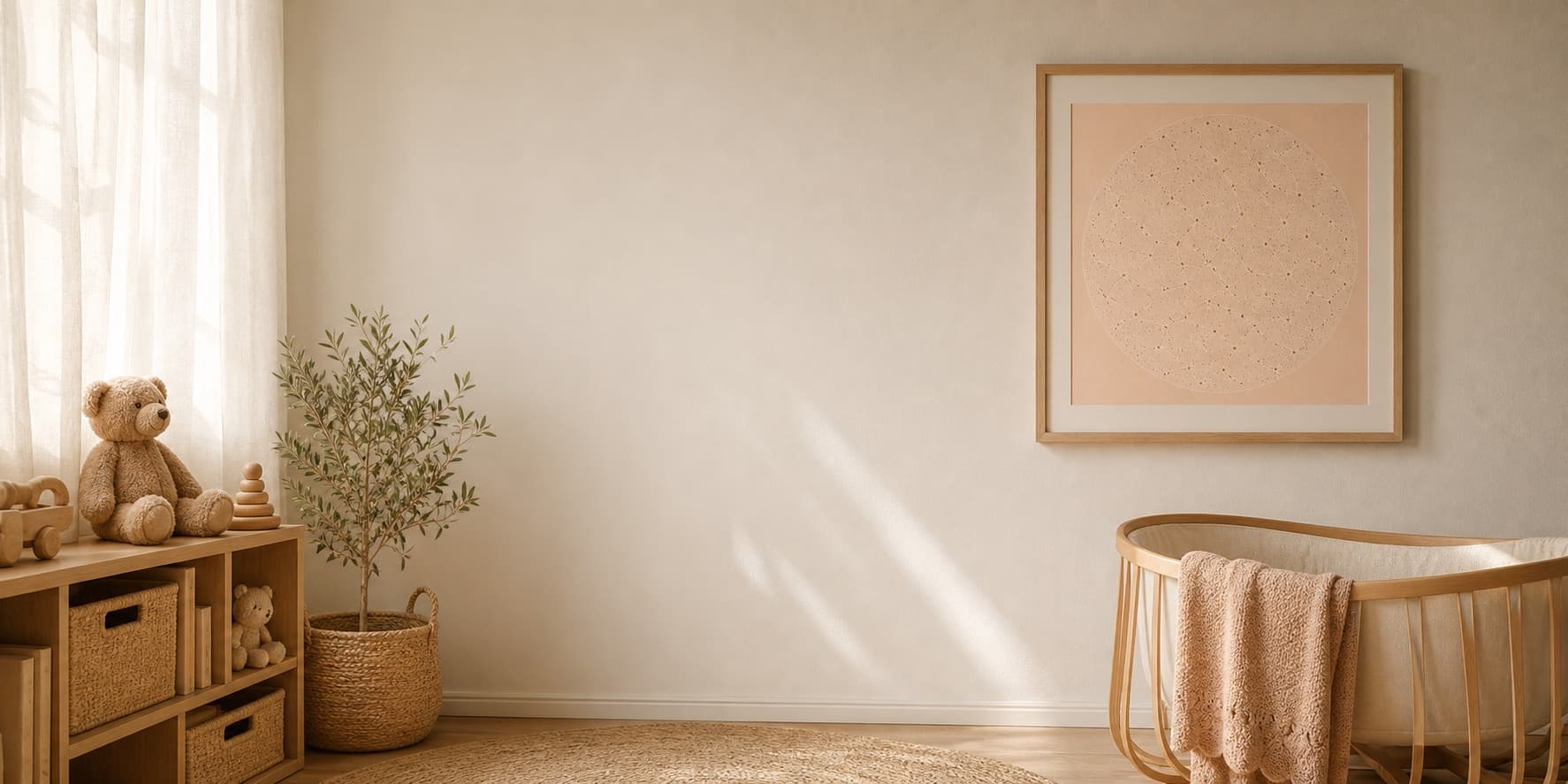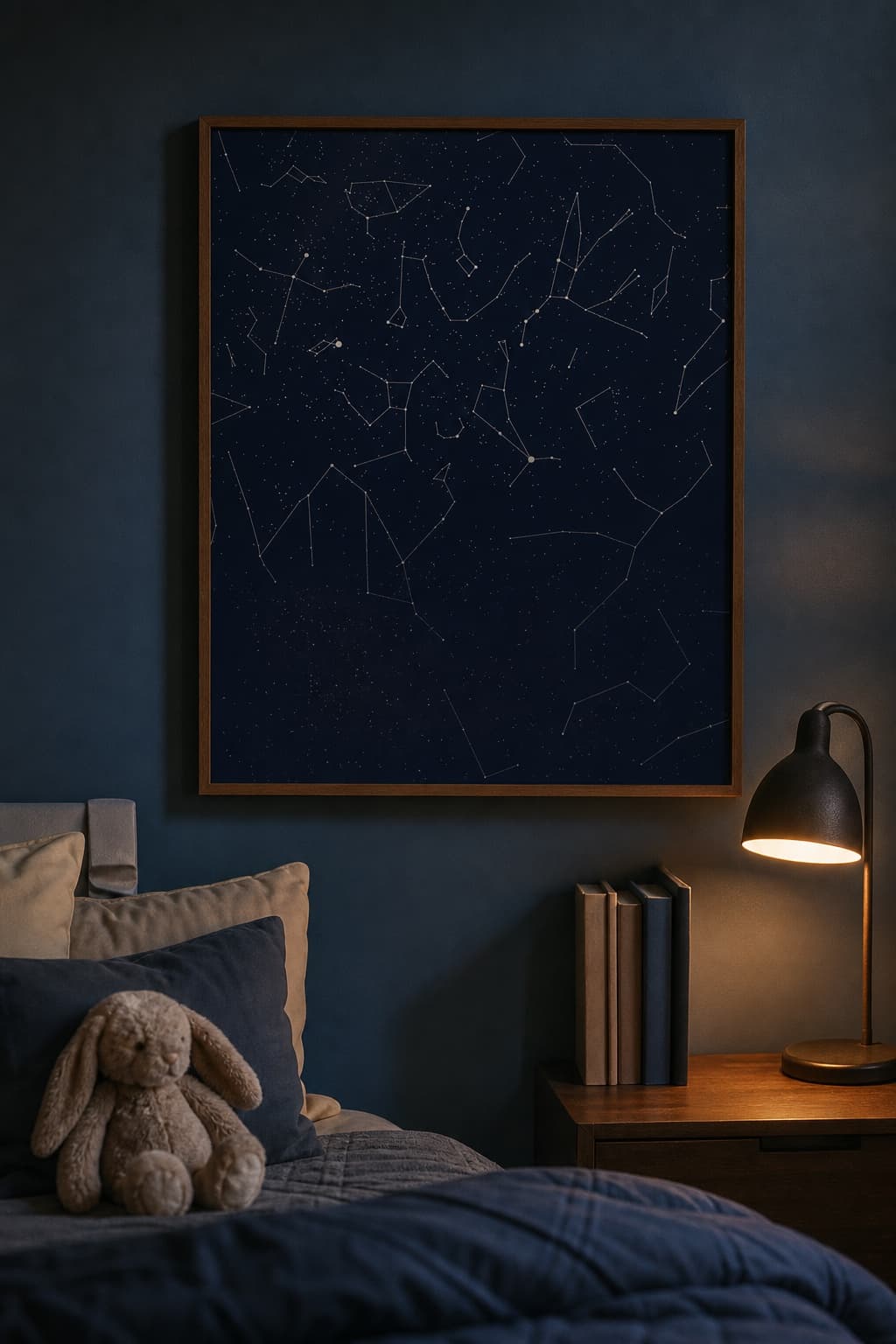
Most space-themed nurseries are designed for a child who doesn’t exist yet, and grown out of by the time one does.
A celestial nursery is the calm version. No cartoon rockets, no neon planets, no glow-in-the-dark stickers across the ceiling.
Soft palettes, real moons, real stars, and pieces that age with the child rather than against them.
This guide covers how to build that version — the centerpiece, the supporting pieces, the palette, and what to avoid.
Why a celestial theme works for nurseries
Three reasons. First, the imagery is universal — stars and moons aren’t tied to a specific gender, era, or trend.
Second, the palettes (deep navy-and-cream, soft peach-and-gold) photograph and live well at any hour of the day, which matters in a room where the lights spend more time dim than bright. Third, the theme grows up gracefully — the same wall art works for a newborn, a five-year-old, and a teenager.
Compare it to, say, a jungle theme: cute monkey art will be off the wall by kindergarten. A birth-night star map can stay on the wall through college.
Palette: pick one of three
Cream-and-gold (the warm version)
Soft cream walls, gold or brass accents, warm-toned wood furniture.
Star prints use a cream or warm-peach background with gold or warm-bronze line work. Calming, photogenic, leans boho.
Best for: nurseries where the existing room is already warm-toned, parents who want a softer feel, rooms shared with adults.
Dusty navy and cream (the balanced version)
Soft muted navy on the walls or as accent color, cream secondary, white furniture, occasional brass or rose-gold accents. Star prints in deep navy backgrounds with white or cream stars.
Best for: nurseries where you want something a bit more grown-up than full pastel, and a clear “night-sky” identity without going dark.
Sage and cream (the trend-forward version)
Soft sage green walls, cream secondary, warm-wood furniture, brass details.
Star prints in cream-on-cream or pale-gold-on-sage. Reads as a quieter, updated take on celestial.
Best for: nurseries that want to feel current without committing to navy or cream-only. Pairs naturally with cottagecore and botanical accents.
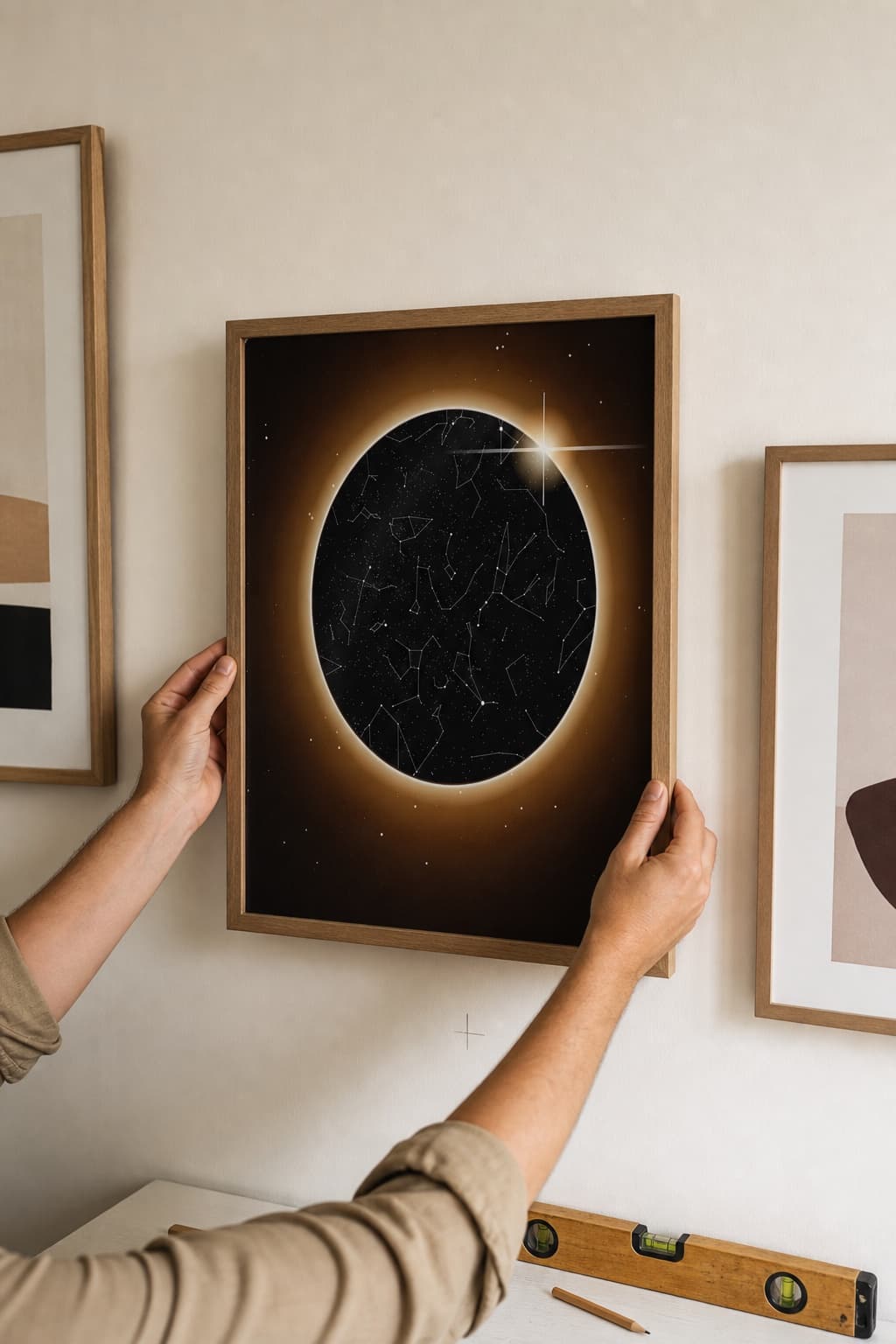
The centerpiece: a birth-night star map
The defining piece. Hung above the crib, the changing table, or the rocking chair — usually the wall the parents look at most often.
What it shows: the night sky over the hospital (or wherever the baby was born) at the exact moment of birth. Stars in their actual positions, the moon phase visible that night, the planets if any were up.
What it doesn’t show: cartoons, characters, generic decoration. It’s the real sky — one specific night, frozen.
Sizing: 18×24 inches is the most common for nurseries. 12×16 if the wall is small. 24×36 if it’s an only-child nursery with a single big focal wall. For the full birth-night gift framing, see Birth Star Maps & Nursery Art.
Supporting pieces (pick one or two)
A soft moon-phase strip
Horizontal moon-phase strip in soft cream or peach tones.
Goes on the wall opposite the centerpiece, or above the changing table. Calming, slightly tactile, doesn’t fight the central star map for attention.
A single constellation print
A single named constellation drawn as soft line work — usually the baby’s zodiac sign, or just an Orion or Big Dipper. Small (8×10 or smaller), in matching cream/gold palette.
A star-string or star mobile
A small string of stars across a wall corner, or a star/moon mobile hung above the crib. Adds dimension without adding another framed print.
A small dimmer star projector
Not wall art, but mentioned because it’s often part of the same setup — a small star projector that throws gentle dots of light onto the ceiling at night. Picks where the wall art leaves off.
What to avoid
- Glow-in-the-dark stickers on the ceiling. Looks fun for a week, looks tired for years.
- Cartoon rocket-ship and astronaut prints. Reads as “space” rather than “celestial” — different category, dates faster.
- Neon or saturated primary colors. Loud against soft pastels and breaks the calm energy.
- More than three framed pieces in the room. Crowds a small space and pulls focus from the centerpiece.
- Black backgrounds on every piece. A nursery handles one dramatic dark piece, but a whole wall of dark prints reads as moody-teenager-room rather than baby room.
Layout suggestions
Layout 1: classic single anchor
One centerpiece (18×24 birth-night star map) over the crib.
One supporting moon-phase strip on the opposite wall. Nothing else hangs.
Layout 2: small gallery cluster
Centerpiece star map plus two smaller supporting prints (constellation + moon phase, or two constellations) in a cluster on the wall over the changing table. The crib wall stays empty for safety and visual rest.
Layout 3: matched siblings
For a shared nursery: two birth-night star maps in matching frames and palettes, one per child, hung side by side. Each kid has their own centerpiece without splitting the room into halves.
For boys, for girls, or unisex
Celestial palettes are essentially neutral.
A peach-and-cream nursery reads as soft for any child; a navy-and-gold nursery reads as grown-up for any child. The conventional “blue for boys, pink for girls” doesn’t apply here, which is one of the reasons celestial nurseries are popular for unisex setups and for parents who don’t want a gendered room.
The bridge: the night they arrived, on the nursery wall
The strongest version of a celestial nursery has one piece that’s irreplaceably specific: the actual sky from the night the baby was born. It anchors the room and grows with the child.
Plug the birth date and place into the SkyWhen customizer and the preview will show that exact sky. The preview is free.
For the gift framing, see Birth Star Maps & Nursery Art. For other decor categories, see Celestial Wall Art Ideas and Moon Phase Wall Art.
FAQ
What's a celestial nursery?
A nursery built around a calm night-sky theme — stars, moons, and constellations as the main motifs, in soft palettes (cream, peach, dusty navy), with grown-up pieces that age with the child.
What goes on the wall of a celestial nursery?
A centerpiece (usually a birth-night star map), plus one or two supporting pieces (a soft moon-phase strip, a single constellation print). Three pieces total is the sweet spot.
Is a celestial nursery good for a boy or a girl?
It’s essentially gender-neutral — the palettes work for any child. That’s part of why celestial themes are popular for unisex nurseries and for shared rooms.
What palette works best for a celestial nursery?
Cream-and-gold (warm), dusty-navy-and-cream (balanced), or sage-and-cream (trend-forward) are the three most-pinned palettes. Pick one and stay consistent across the room.
Will the room still work when the child grows up?
Yes — that’s the main advantage of celestial themes over cartoon themes. A birth-night star map, a moon-phase strip, and a constellation print all stay on the wall comfortably through childhood and beyond. No re-decoration required.